

 中文简体
中文简体 English
 Français
 Deutsch
 عربى
عربى
Why Does Cat8 Support Up to 2000MHz?
Category 8 Ethernet cable is commonly described with three numbers: 40Gbps, 2000MHz, and 30 meters.
These specifications are related, but they do not mean the same thing.
The 2000MHz rating describes the frequency range over which Category 8 cabling performance is specified and tested. It does not mean that 2000MHz is the same as 40Gbps, nor does a cable become Cat8 simply because “2000MHz” is printed on its jacket.
Compared with Category 6A, which is specified up to 500MHz, Category 8 extends the cabling frequency range to 2000MHz—four times higher. Fluke Networks likewise identifies 500MHz as the maximum specified frequency for Cat6A and 2000MHz for Cat8/Class I/II cabling.
So what allows Cat8 to operate across such a much wider frequency range?
The answer is not one single feature. Cat8 performance depends on the complete transmission system—including conductor and insulation design, twisted-pair geometry, shielding, impedance control, connecting hardware, termination quality, and manufacturing consistency.
What Does “Cat8 Supports 2000MHz” Actually Mean?
MHz measures frequency, while Gbps measures data rate.
They should not be treated as interchangeable specifications.
For balanced twisted-pair cabling, the frequency rating defines the range over which specified transmission parameters must meet the applicable limits. For Cat8, field certification extends from 1MHz to 2000MHz, while Cat6A field testing extends to 500MHz.
That distinction is important.
A manufacturer does not demonstrate Cat8 performance merely by transmitting a signal at 2000MHz. The cabling must maintain acceptable transmission characteristics across the specified frequency range.
These include parameters such as:
- Insertion Loss
- Return Loss (RL)
- NEXT (Near-End Crosstalk)
- PS NEXT
- ACR-F
- PS ACR-F
- other applicable balance, shielding, and transmission parameters
This can be seen directly in Cat8 cable specifications.
For example, one 22AWG Cat8 S/FTP cable specification supplied to Ningbo EXW defines transmission characteristics at frequencies from 1MHz through 500, 600, 1000, 1500 and 2000MHz, including limits for insertion loss, return loss, NEXT, PS-NEXT, ACR-F and PS ACR-F.
A 24AWG stranded Cat8 patch-cable design similarly specifies transmission characteristics through 2000MHz.
This is the more useful way to understand a Cat8 “2000MHz” claim:
2000MHz is not simply a number printed on the cable. The cabling system must maintain the required electrical transmission performance across the Category 8 frequency range.
Why Is Cat8 2000MHz While Cat6A Is 500MHz?
The difference becomes clearer when Cat8 is compared with Cat6A.
| Specification | Cat6A | Cat8 |
|---|---|---|
| Maximum specified frequency | 500MHz | 2000MHz |
| Common BASE-T application | 10GBASE-T | 25GBASE-T / 40GBASE-T |
| 25/40GBASE-T channel reach | — | Up to 30m |
| Shielded construction available | Yes | Yes |
| Field test frequency | Up to 500MHz | Up to 2000MHz |
Fluke's cabling guidance lists Cat6A/Class EA at 500MHz and Cat8/Class I/II at 2000MHz. For 25/40GBASE-T applications, Cat8 uses a maximum 30m channel configuration.
The important point is that Cat8 does not reach 2000MHz simply because it is shielded.
Our comparison of actual cable specifications demonstrates why.
A Cat6A patch cable specification supplied to Ningbo EXW uses stranded copper conductors, foil shielding around the pairs and an overall braid screen—in other words, a shielded construction—yet its specified transmission range ends at 500MHz.
The Cat8 cables also use pair shielding and an overall braid, but their designs and specified electrical performance extend through 2000MHz.
Therefore:
S/FTP construction helps Cat8 control interference and crosstalk, but S/FTP construction alone does not make a cable Category 8.
That distinction matters when evaluating products marketed as “Cat8.”
What Makes Performance at 2000MHz More Difficult?
As operating frequency increases, maintaining signal integrity over balanced copper cabling becomes increasingly demanding.
At higher frequencies, losses increase and unwanted coupling and impedance discontinuities become more significant. Parameters that may have comfortable margins at lower frequencies can become increasingly difficult to control as the test approaches the upper end of the Cat8 frequency range.
The Cat8 specification data illustrates this clearly.
For the 22AWG Cat8 cable example, the specified maximum insertion loss increases from 5.6dB/100m at 100MHz to 12.8dB/100m at 500MHz, 18.6dB/100m at 1000MHz, and 27.2dB/100m at 2000MHz. At the same time, specified NEXT and return-loss limits also change as frequency increases.
The numbers themselves are less important to a buyer than what they demonstrate:
High-frequency Cat8 design is a problem of controlling multiple transmission characteristics simultaneously—not simply increasing one performance number.
Small changes in cable construction, pair geometry, shielding, termination, or connector design can have a greater impact as frequency rises.
How Does S/FTP Construction Help Cat8 Reach 2000MHz?
S/FTP is an important part of many Cat8 designs.
In an S/FTP cable:
S refers to an overall braided screen.
FTP indicates that the individual twisted pairs are foil shielded.
The Cat8 cable specifications supplied to Ningbo EXW show this construction clearly. The 22AWG solid design uses individual Aluminum/PET foil screens together with an overall tinned-copper braid with at least 45% coverage.
The 24AWG stranded Cat8 patch cable uses a similar architecture, with Aluminum/PET pair shielding and an overall tinned-copper braid.
This multi-layer shielding helps reduce unwanted electromagnetic coupling.
Individual pair shields help isolate the four balanced pairs from each other, while the overall braid provides an additional shield around the cable core. Shielding is also important for controlling external interference and alien crosstalk, which becomes increasingly significant at higher frequencies. Fluke notes that Category 8 remains a shielded cabling system and that alien crosstalk remains an important consideration as Cat8 operates at four times the 500MHz frequency range of Cat6A.
However, this leads to an important qualification:
Shielding is necessary to the design, but shielding by itself does not guarantee 2000MHz Cat8 performance.
A shielded cable still has to satisfy the applicable electrical transmission requirements.
Why Do Conductor and Insulation Design Matter?
Inside a high-frequency balanced cable, the dimensions and materials surrounding the conductors influence electrical characteristics such as impedance, attenuation, propagation and coupling.
The Cat8 specifications supplied to Ningbo EXW illustrate how deliberately these elements are defined.
One Cat8 installation cable uses 22AWG solid bare copper conductors with a nominal 0.64mm conductor diameter, together with Foam PE Skin-Foam-Skin insulation and a specified insulation structure of 1.68mm.
The stranded Cat8 patch-cable design instead uses 24AWG stranded bare copper conductors and a 1.40mm Foam PE Skin-Foam-Skin insulation structure.
This also illustrates another important point:
There is no single conductor size or cable diameter that automatically makes a cable Cat8.
Different Cat8 constructions can use different conductor designs depending on whether the cable is intended as installation cable, patch cable, or another application.
What matters is whether the finished design meets the required Category 8 transmission performance.
Why Does Pair Geometry Matter at 2000MHz?
Twisting two conductors into a balanced pair helps reject external noise and control coupling. But at Cat8 frequencies, simply having “twisted pairs” is not enough.
The geometry of the pairs must remain sufficiently controlled throughout manufacturing.
Changes in conductor spacing, insulation dimensions, pair geometry, shield placement, or deformation can alter electrical characteristics. At very high frequencies, those changes can contribute to impedance discontinuities, return-loss problems and crosstalk.
This is one reason manufacturing consistency becomes especially important for Cat8.
The finished cable has to perform as a repeatable electrical structure—not merely look identical from the outside.
For a cable manufacturer, therefore, achieving Cat8 performance requires control over both the material design and the production process.
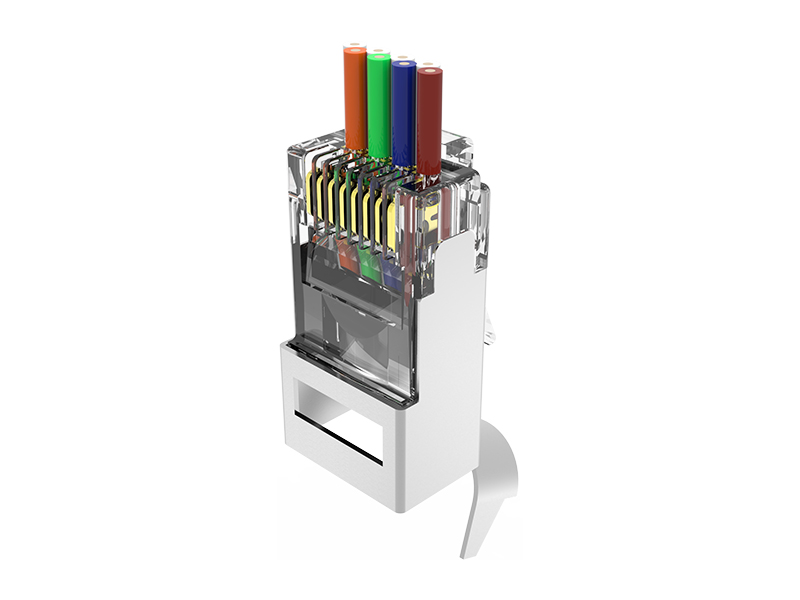
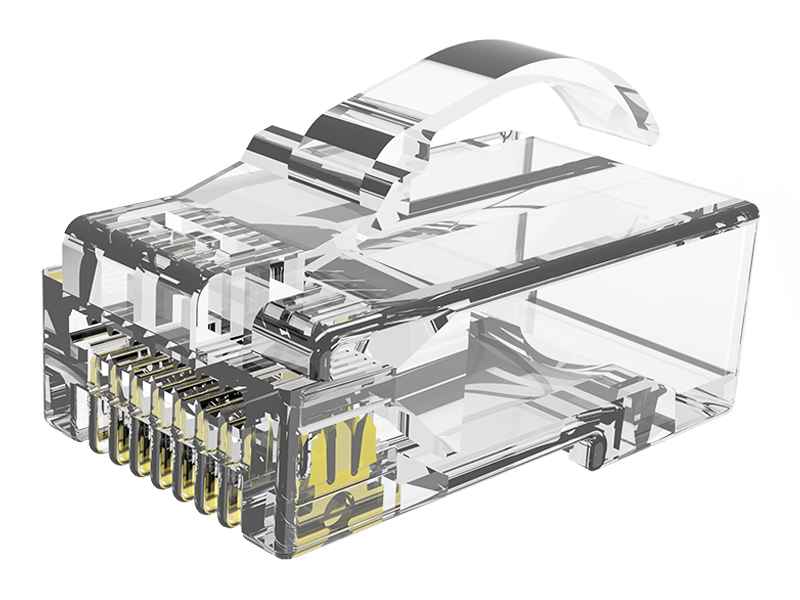
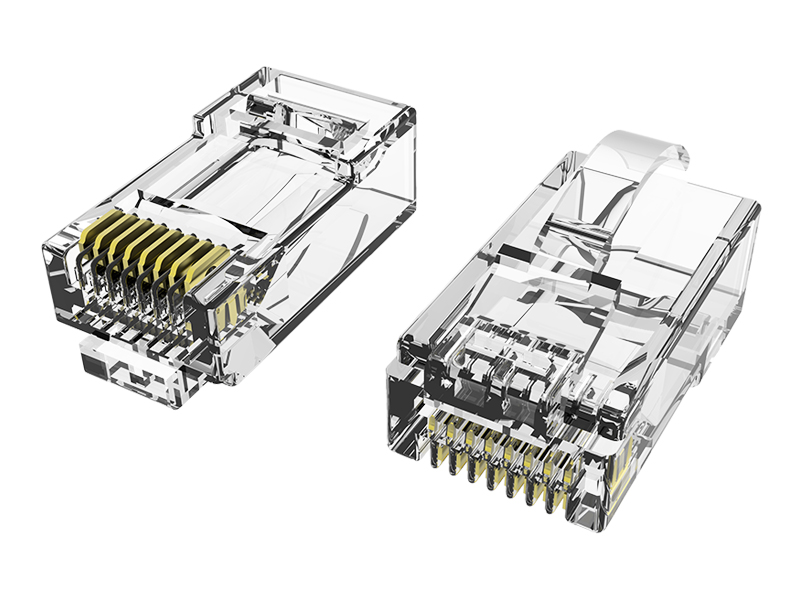
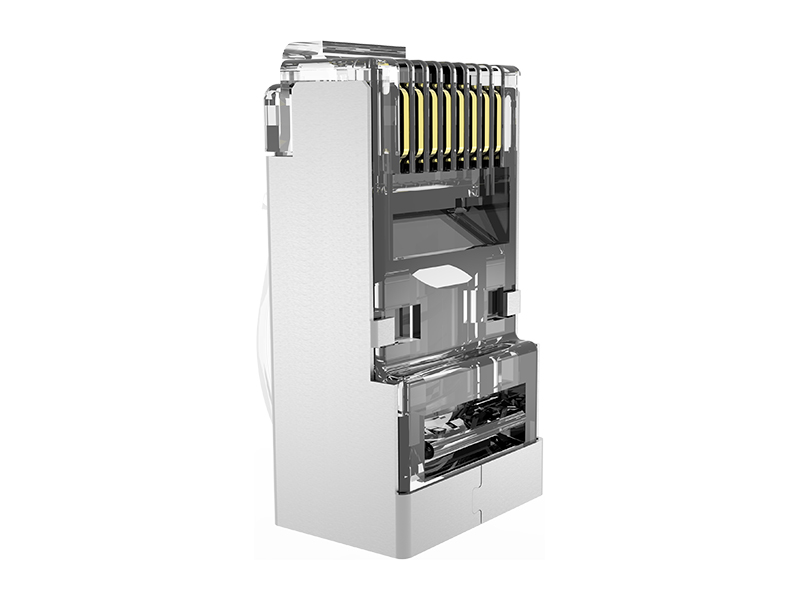
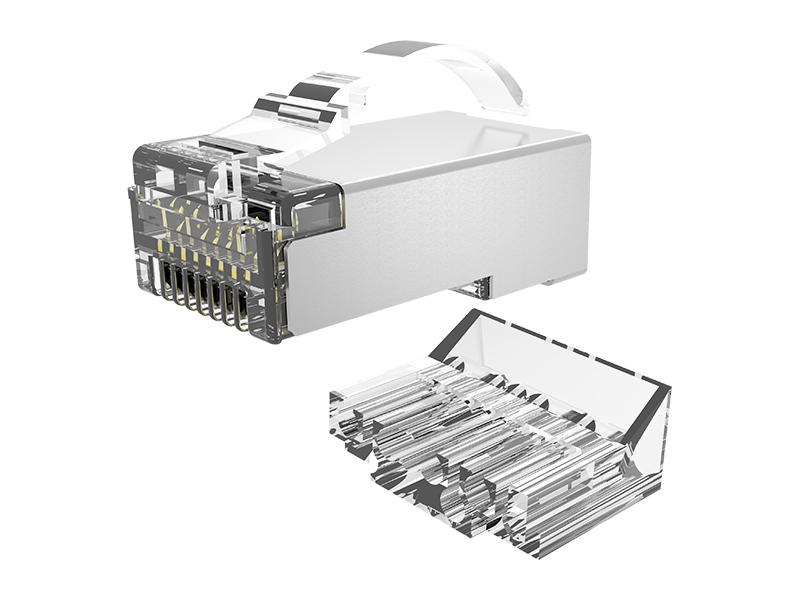
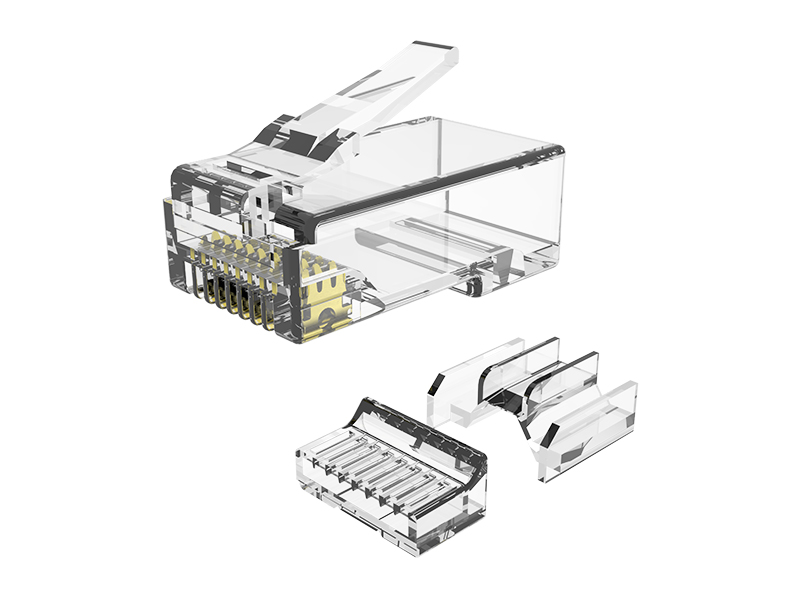
Why Does the RJ45 Connector Matter at 2000MHz?
The cable is only one part of the transmission path.
A Cat8 channel also includes connecting hardware, and the transition from twisted-pair cable into a connector creates one of the areas where electrical geometry changes.
At 2000MHz, connector design and termination quality therefore become particularly important.
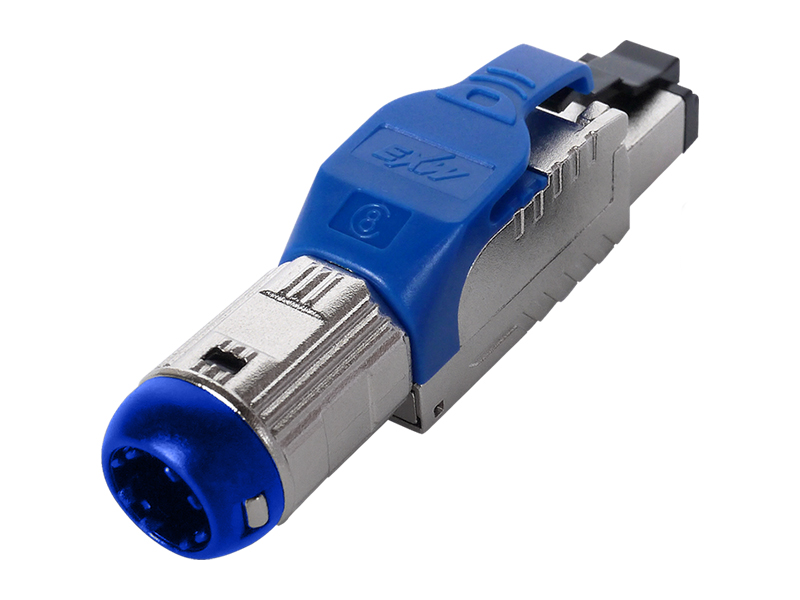
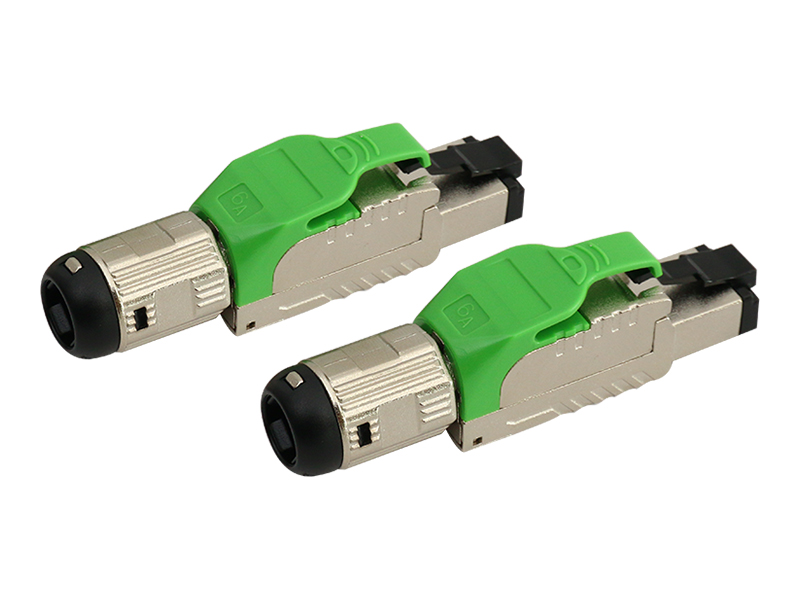
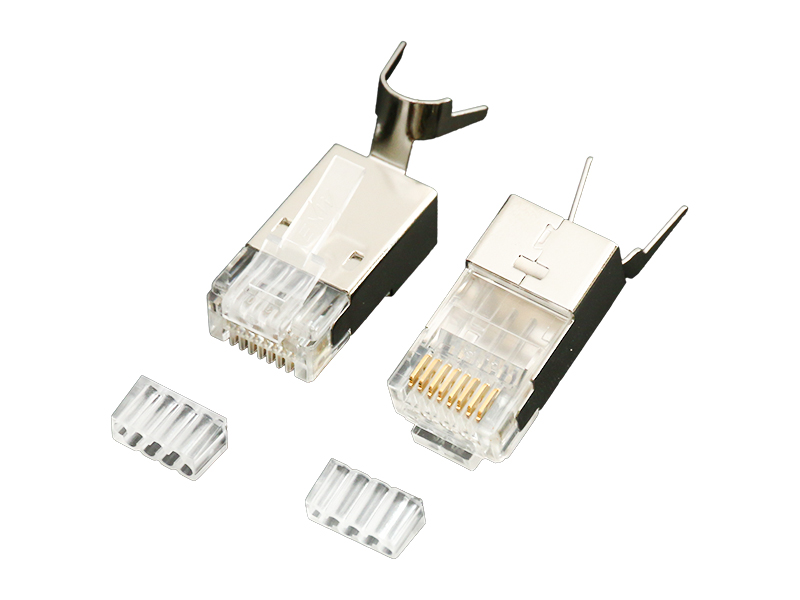
ANSI/TIA Category 8 maintains the familiar 8-position modular interface commonly referred to as RJ45, providing backward physical compatibility with earlier RJ45-based category cabling. Fluke notes that Category 8 connecting hardware and channels are specified up to 2000MHz.
This means that a Cat8 channel cannot rely on a high-performance cable while ignoring its connectors.
The cable, plug, jack and termination all have to work together to maintain the required channel performance.
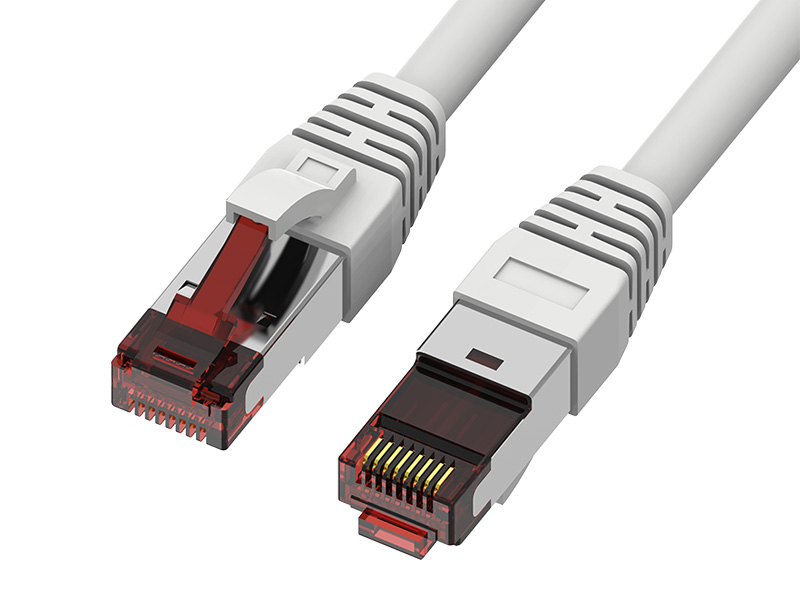
For manufacturers such as Ningbo EXW that produce both Cat8 patch cords and RJ45 connecting products, this system-level consideration is particularly important during product development and verification.
How Is Cat8 Performance Up to 2000MHz Verified?
This is where the difference between a marketing claim and measurable performance becomes clearer.
A Cat8 cable may be marked “2000MHz,” but installed cabling performance should be evaluated against an appropriate Cat8/Class I/Class II test limit using equipment capable of testing the required frequency range.
Fluke's DSX-8000, for example, supports Cat8/Class I/Class II certification testing with a maximum test frequency of 2000MHz. By comparison, Cat6A-oriented testing extends to 500MHz.
A certification test evaluates multiple transmission parameters rather than checking only whether a signal exists at 2GHz.
Depending on the selected test standard and configuration, these can include:
Insertion Loss, NEXT, PS NEXT, ACR-F, PS ACR-F, Return Loss and other required parameters.
A PASS therefore means that the measured cabling configuration satisfied the applicable test limits—not simply that the tester reached 2000MHz.
This distinction is important when comparing Cat8 products.
Printing “2000MHz” on a cable jacket is easy. Maintaining compliant transmission performance across the Cat8 frequency range is the real challenge.
Does 2000MHz Mean Cat8 Transfers Data at 2000Mbps?
No.
This is one of the most common misunderstandings surrounding Ethernet cable specifications.
MHz is a frequency measurement.
Mbps or Gbps is a data-rate measurement.
There is no direct conversion such as:
2000MHz = 2000Mbps
or
2000MHz × a fixed number = 40Gbps.
Modern Ethernet uses sophisticated signaling, encoding and digital signal processing to transmit multiple bits of information over the available cabling bandwidth. This is why frequency and data rate are related but fundamentally different specifications. Fluke likewise distinguishes cabling bandwidth from network data rate rather than treating them as equivalent.
For Category 8, the 2000MHz cabling specification provides the transmission-performance range required to support high-speed applications for which Cat8 was developed.
IEEE 802.3bq defines 25GBASE-T and 40GBASE-T operation over balanced twisted-pair structured cabling, with LAN interconnects of up to 30m.
So it is better to express the relationship as:
2000MHz → cabling frequency performance
40Gbps → Ethernet data rate
They belong to the same system, but they are not the same measurement.
Does a 2000MHz Cable Automatically Support 40Gbps?
Not by the frequency marking alone.
A cable jacket marked “Cat8 2000MHz” does not by itself prove that an installed link will operate as a compliant 40GBASE-T channel.
Several conditions matter:
Cable performance — The cable must satisfy applicable Category 8 electrical requirements.
Connecting hardware — Plugs, jacks and other connecting hardware must be suitable for the required performance.
Termination and installation — Poor termination or installation can degrade an otherwise compliant component.
Channel configuration and length — 25GBASE-T and 40GBASE-T Category 8 applications are based on a maximum 30m channel. Fluke lists a maximum Cat8 permanent link of 24m and maximum channel of 30m for these applications.
Active equipment — Both ends of the network must actually support the required Ethernet application.
This is why cable category, cabling frequency and Ethernet link speed should not be treated as interchangeable claims.
Cat8 vs Cat6A: Is 2000MHz Always Better?
Not necessarily.
Cat8 provides a much wider specified frequency range, but that does not mean every network should replace Cat6A with Cat8.
Cat6A supports 10GBASE-T over a conventional 100m channel and remains appropriate for many enterprise structured-cabling applications.
Cat8 was developed around much shorter, higher-speed copper links. For 25GBASE-T and 40GBASE-T, the specified channel length is up to 30m, making the category particularly relevant to short data-center connections.
The choice should therefore depend on the required application—not simply on which cable has the larger MHz number.
| Requirement | Cat6A | Cat8 |
|---|---|---|
| Maximum specified frequency | 500MHz | 2000MHz |
| 10GBASE-T | Yes | Yes |
| 25/40GBASE-T | No | Yes, within applicable reach |
| Conventional maximum channel for primary high-speed application | 100m | 30m for 25/40GBASE-T |
| Typical application focus | Enterprise LAN | Short high-bandwidth copper links / data centers |
What Should Buyers Check When a Cat8 Cable Claims “2000MHz”?
A “2000MHz” label should be the beginning of the evaluation, not the end.
For OEMs, distributors, installers and network buyers evaluating a Cat8 product, useful questions include:
- What Cat8/Class I/Class II standard or test limit is being used?
- Was performance evaluated across the full required frequency range up to 2000MHz?
- Can the supplier provide transmission-performance data or certification test reports?
- What was the tested channel or cord configuration and length?
- What cable construction is used?
- Are the connecting components suitable for Category 8 performance?
- Does the complete configuration pass the applicable transmission parameters rather than merely carrying a “2000MHz” marking?
These questions provide much more information than simply comparing frequency numbers printed on product packaging.
Conclusion: 2000MHz Is a System Performance Requirement, Not Just a Cable Label
Cat8 reaches a specified frequency range of up to 2000MHz because the category was engineered for substantially higher-frequency transmission performance than previous RJ45-based cabling categories.
But there is no single feature responsible for that capability.
S/FTP shielding helps control internal and external interference. Carefully controlled conductor, insulation and pair geometry help maintain electrical characteristics. Connecting hardware and termination must minimize high-frequency discontinuities. And the complete cabling configuration must continue to satisfy the required transmission limits across the Category 8 frequency range.
Perhaps the most important lesson is that S/FTP does not automatically mean Cat8, and “2000MHz” printed on a jacket does not by itself demonstrate Cat8 performance.
Actual Category 8 performance is demonstrated through measurable transmission characteristics and appropriate testing.
That is the real engineering behind the 2000MHz number.
FAQ
Why is Cat8 rated at 2000MHz?
Category 8 cabling is specified and tested across a frequency range extending to 2000MHz to provide the transmission performance required for higher-speed balanced-copper Ethernet applications, including 25GBASE-T and 40GBASE-T within their specified reach.
Is Cat8 four times faster than Cat6A because 2000MHz is four times 500MHz?
No. Cat8's specified frequency range is four times that of Cat6A, but Ethernet data rate does not scale through a simple MHz-to-Gbps multiplication. Frequency and data rate describe different characteristics.
Is every S/FTP cable Cat8?
No. Cat6A can also use foil pair shielding and an overall braid. The cable must meet the applicable Category 8 transmission-performance requirements to qualify as Cat8. The Cat6A and Cat8 specifications reviewed for this article demonstrate that both can use shielded constructions while having very different specified frequency ranges.
Does Cat8 2000MHz automatically mean 40Gbps?
No. The 2000MHz specification describes cabling frequency performance. A 40GBASE-T link also depends on compliant cable and connecting hardware, channel configuration, installation quality, length and compatible active equipment.
How do you test Cat8 to 2000MHz?
Category 8 cabling can be field-certified with an appropriate tester and Cat8/Class I/Class II test limit. For example, the Fluke Networks DSX-8000 supports Cat8/Class I/II certification through 2000MHz.
Is Cat8 better than Cat6A for every installation?
No. Cat6A supports 10GBASE-T over 100m channels and is suitable for many enterprise networks. Cat8 is intended for higher-frequency, shorter-reach applications and supports 25/40GBASE-T within a maximum 30m channel configuration.