

 中文简体
中文简体 English
 Français
 Deutsch
 عربى
عربى
Content
2-Prong vs. 3-Prong RJ45 Plug Contacts: What's the Difference?
RJ45 modular plugs may look similar from the outside, but their internal contact designs can differ. One important difference is the use of 2-prong or 3-prong contact blades.
These small features affect how the plug connects to the copper conductors inside an Ethernet cable. For cable assembly manufacturers and OEM buyers, choosing the right contact design starts with understanding the cable—not simply counting the prongs.
What Are RJ45 Contact Prongs?
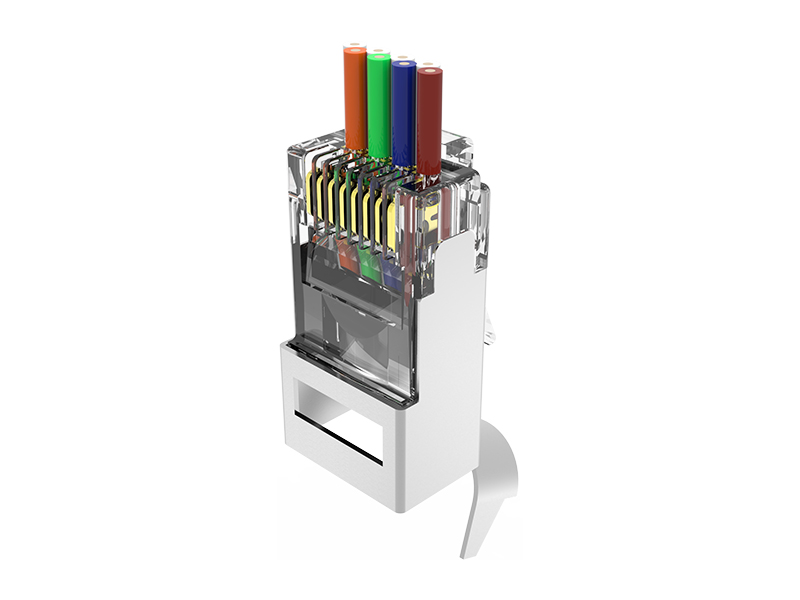
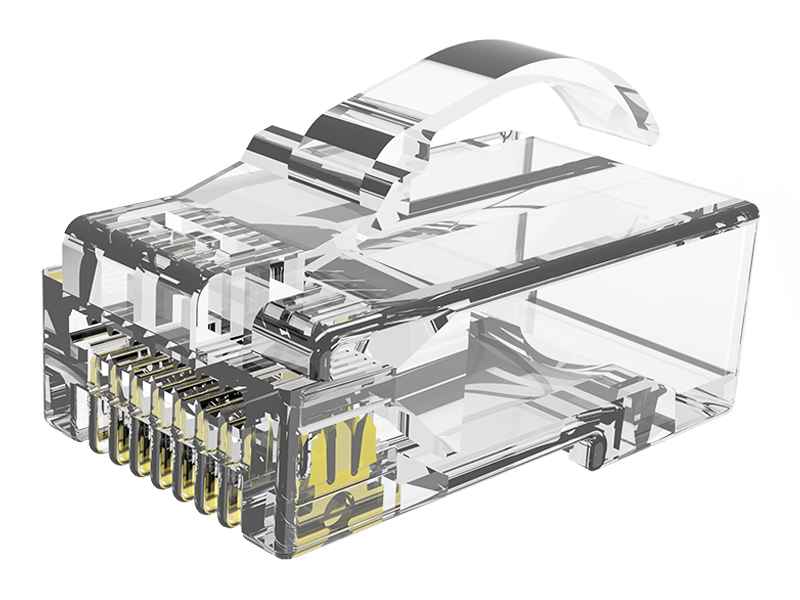
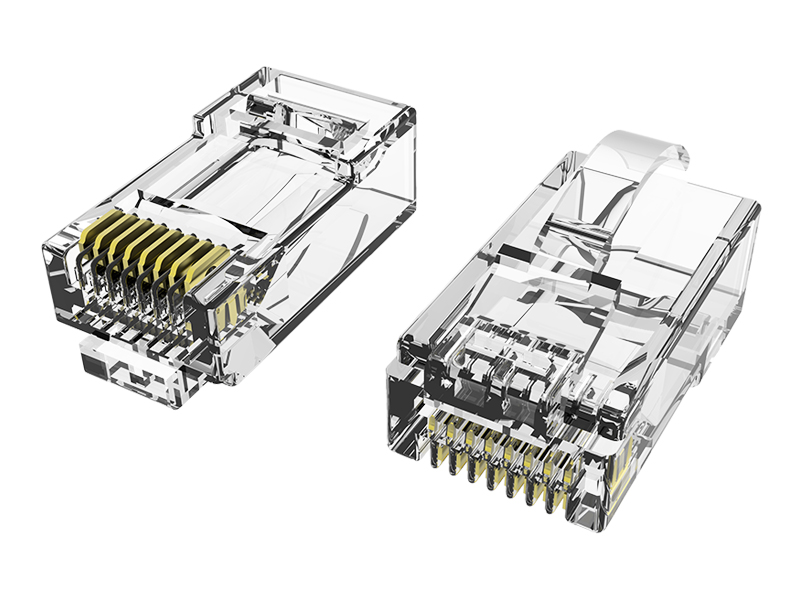
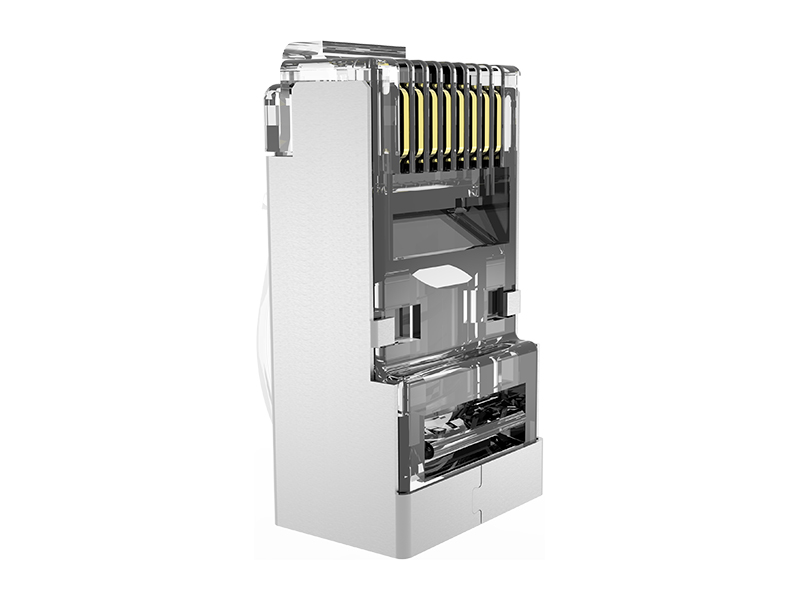
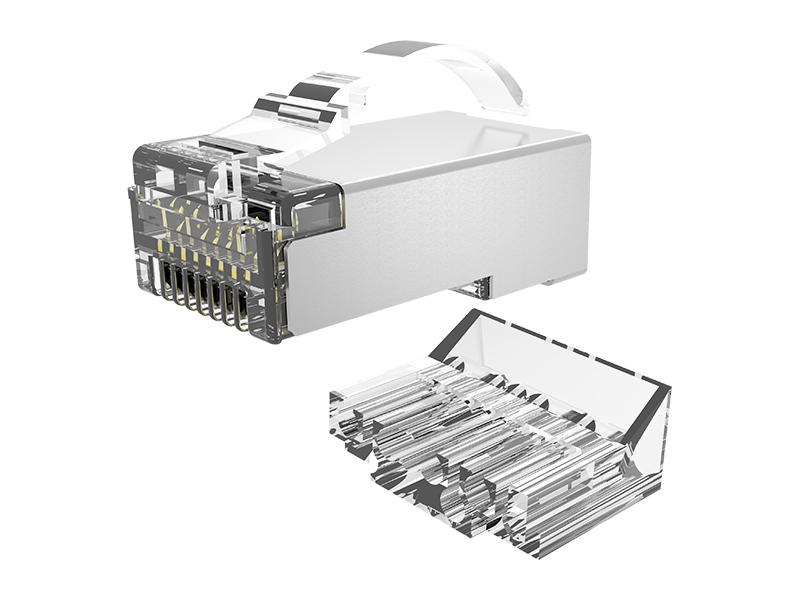
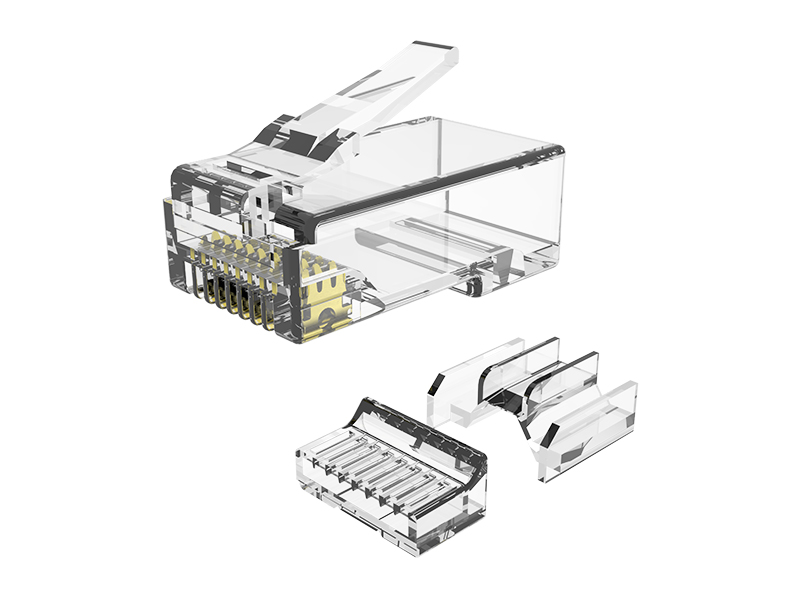
A typical Ethernet RJ45 plug has eight metal contacts, one for each conductor. Each contact has a mating surface that connects with the jack and a termination section that connects with the cable conductor.
The terms 2-prong and 3-prong describe the small teeth on the conductor termination section. They do not refer to the total number of contacts in the plug.
During crimping, these teeth penetrate the conductor insulation and establish electrical contact with the copper. Their shape, position, and alignment help determine which conductor constructions the contact can accommodate.
Solid vs. Stranded Conductors
Before comparing contact designs, it helps to understand the two main conductor constructions:
-
Solid conductors contain one continuous copper wire per conductor.
-
Stranded conductors contain multiple smaller copper strands bundled together.
These constructions interact differently with a contact blade. A design intended for stranded conductors may not terminate a solid conductor correctly, even when the wire physically fits inside the plug.
This is why the manufacturer's conductor compatibility specification matters.
What Are 2-Prong RJ45 Contacts?
A 2-prong contact has two teeth at its conductor termination section.
Many common 2-prong designs are intended for stranded conductors. Their teeth penetrate the insulation and make contact with the copper strands during crimping.
For a production line using a consistent stranded cable specification, a compatible 2-prong plug can be a practical choice.
However, not all 2-prong contacts are stranded-only. Different blade geometries can be designed for different conductor types. EXW, for example, identifies separate 2-prong designs for solid and stranded cables.
The correct question is therefore: “Is this specific plug approved for my conductor construction and dimensions?”
What Are 3-Prong RJ45 Contacts?
A 3-prong contact has three teeth at its conductor termination section.
Some designs use staggered teeth to engage the conductor at different positions. EXW's staggered 3-prong designs are intended to accommodate both solid and stranded conductors within their specified compatibility ranges.
For manufacturers working with both cable constructions, a plug approved for both can simplify purchasing and inventory management—provided the cable dimensions also match.
However, three prongs alone do not make every plug universally compatible. The complete contact geometry and the plug’s stated specifications still determine suitability.
2-Prong vs. 3-Prong Contacts: Quick Comparison
| Selection factor | 2-prong contacts | 3-prong contacts |
|---|---|---|
| Termination teeth per contact | Two | Three |
| Common compatibility | Often stranded; dedicated solid-wire designs also exist | Designs compatible with both solid and stranded are available |
| Main selection check | Confirm the specific blade’s conductor compatibility | Confirm whether the model supports one or both conductor types |
| Production use | Suitable for a matched, consistent cable specification | Can simplify selection when both conductor types are used |
| Cable dimensions | Must match the plug specification | Must match the plug specification |
| Performance assessment | Evaluate the complete terminated assembly | Evaluate the complete terminated assembly |
Neither design should be selected by prong count alone.
Are 3-Prong Contacts Always Better?
A well-designed 3-prong contact can offer useful advantages, particularly when it supports both solid and stranded conductors.
However, it does not automatically provide higher Ethernet speeds or guarantee a more reliable finished cable.
Connection quality also depends on:
-
Contact material and geometry
-
Conductor size and insulation diameter
-
Contact positioning and crimping depth
-
Plug housing and wire management
-
Cable strain relief
-
Tooling compatibility and assembly consistency
A correctly matched 2-prong plug can be suitable for its intended application. A mismatched 3-prong plug can still produce an unreliable termination.
Likewise, the number of prongs does not determine whether a plug meets Cat.5e, Cat.6, or Cat.6A performance requirements. Those requirements concern the performance of the complete connector and cabling assembly.
How to Choose the Right RJ45 Plug
1. Confirm the conductor construction
Identify whether the cable uses solid or stranded conductors. Then check the plug’s compatibility specification.
For stranded wire, provide the strand construction when available, rather than relying only on the overall AWG designation.
2. Check AWG and insulation diameter
AWG describes conductor size, but it does not describe the diameter of the insulation surrounding the copper.
Two cables with the same AWG can have different insulated conductor diameters. Both measurements matter when selecting a plug and load bar.
3. Check the overall cable diameter
The cable jacket must fit the plug’s entry and strain-relief structure.
A cable that is too large may be difficult to insert. A cable that is too small may not be secured properly by the intended strain relief.
4. Confirm the tooling
Use the crimping tool or production tooling specified for the plug. Correct tooling helps seat the contacts and engage the strain relief consistently.
5. Validate the finished assembly
Before volume production, assemble samples using the actual cable and intended tooling.
A useful validation plan can include visual inspection, wire-map and continuity checks, mechanical retention checks, and transmission testing appropriate to the product specification.
For OEM projects, confirming the plug-and-cable combination before production helps reduce termination problems and rework.
RJ45 Plug Selection Support from Ningbo EXW
Ningbo EXW manufactures RJ45 modular plugs and Ethernet patch cords for OEM/ODM customers. With in-house engineering, mold tooling, and production capabilities, we support plug selection based on the customer's cable and assembly requirements.
To help identify a suitable contact design, please provide:
-
Solid or stranded conductor construction
-
Conductor AWG and strand construction, if applicable
-
Insulated conductor diameter
-
Overall cable diameter
-
Shielded or unshielded cable construction
-
Required category and gold-plating thickness
-
Intended crimping tool or assembly equipment
Contact Ningbo EXW to discuss a suitable RJ45 modular plug for your cable assembly project.