

 中文简体
中文简体 English
 Français
 Deutsch
 عربى
عربى
Content
- 1 Why Is a Detailed Cat8 Patch Cord Specification Important?
- 2 1. Application and Target Standard
- 3 2. Cable Construction
- 4 3. Jacket Material and Safety Requirements
- 5 4. Length and Length Tolerance
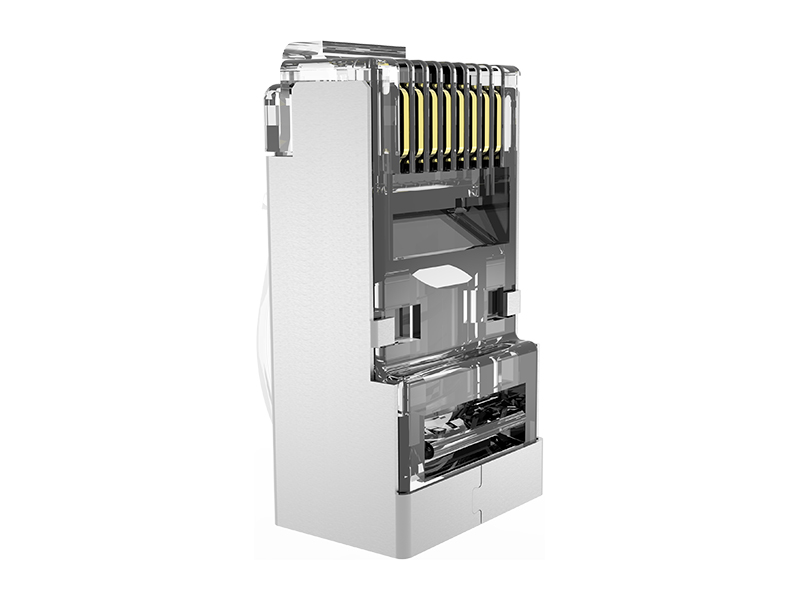
- 6 5. RJ45 Plug and Contact Requirements
- 7 6. Wiring Scheme and Connector Orientation
- 8 7. Boot, Strain Relief, and Mechanical Design
- 9 8. Electrical Performance and Test Method
- 10 9. PoE and Power-Delivery Requirements
- 11 10. Marking, Labeling, and Packaging
- 12 Cat8 Patch Cord OEM Checklist for RFQ
- 13 What Should Be Approved Before Mass Production?
- 14 OEM Cat8 Patch Cord Manufacturing from Ningbo EXW
- 15 Frequently Asked Questions
- 15.1 What information is most important for a first Cat8 patch cord quotation?
- 15.2 Can the same RJ45 plug be used for every Cat8 cable?
- 15.3 Does every Cat8 patch cord need to be 30 meters long or shorter?
- 15.4 Is a channel test report the same as a patch-cord certification?
- 15.5 Can OEM Cat8 patch cords be customized with private-label packaging?
- 16 Technical Reference Notes
Cat8 Patch Cord OEM Specification Checklist
Ordering a custom Cat8 patch cord involves more than choosing a cable length and jacket color. Cable construction, conductor size, connector design, wiring scheme, test method, PoE requirements, labeling, and packaging can all affect performance, compatibility, cost, and delivery time.
For distributors, cabling brands, data center suppliers, and OEM buyers, a complete specification sheet helps the manufacturer quote accurately and build the right product from the first sample. This guide explains the key details to confirm before requesting a Cat8 patch cord quotation.
Why Is a Detailed Cat8 Patch Cord Specification Important?
Category 8 cabling is designed for high-speed, short-distance copper links. It operates at frequencies up to 2,000 MHz and is intended to support 25GBASE-T and 40GBASE-T applications within a maximum 30-meter channel. Unlike lower cabling categories, Cat8 is a shielded solution, so cable construction, connector shielding, and termination quality are especially important.
A request such as “Cat8 patch cord, 2 m, black” leaves several important questions unanswered:
-
Is the cable 22 AWG, 24 AWG, or 26 AWG?
-
Are the conductors stranded or solid?
-
Is the required jacket PVC, LSZH/LSOH, or another compound?
-
What cable outside diameter must the plug accommodate?
-
Is an individual component test, patch-cord test, channel test, or customer-specific test report required?
-
Must the finished product support a particular PoE application or certification?
Confirming these points before sampling reduces repeated revisions and helps ensure that the finished patch cord matches the intended installation.
1. Application and Target Standard
Start with the actual use case. Cat8 is commonly selected for short equipment connections in data centers, server rooms, network cabinets, test environments, and other high-bandwidth applications.
The inquiry should identify:
-
Intended application and installation environment
-
Required data rate, such as 10GBASE-T, 25GBASE-T, or 40GBASE-T
-
Applicable cabling standard or customer specification
-
Cat8.1/Class I or another required system type
-
Indoor, industrial, or other special environmental conditions
For RJ45-based products, buyers should clearly state that an 8P8C modular interface is required. Under the ISO/IEC system, Cat8.1 components are used in Class I channels and retain the familiar RJ45-style interface. Cat8.2/Class II uses different connector interfaces and should not be assumed to be interchangeable with RJ45 equipment.
2. Cable Construction
Cat8 cable is shielded, but the detailed construction still needs to be defined. A typical Cat8 patch cord may use S/FTP construction, with foil shielding around the individual pairs and an overall braid shield.
Confirm the following:
-
Shielding construction, such as S/FTP
-
Number of pairs: normally 4 pairs
-
Stranded or solid conductors
-
Bare copper or another specified conductor material
-
Conductor size, such as 22 AWG, 24 AWG, or 26 AWG
-
Cable outside diameter
-
Pair insulation diameter
-
Drain wire or other construction requirements, if applicable
These values are not merely descriptive. They determine cable flexibility, termination method, plug compatibility, bend behavior, and the tooling required during production.
For example, a flexible 26 AWG stranded patch cable and a larger 22 AWG cable may require different plug structures, wire-management components, and crimp settings. The cable OD and conductor insulation diameter should therefore be confirmed together with the modular plug design.
3. Jacket Material and Safety Requirements
Jacket material should be selected according to the target market and installation environment. Common OEM options include PVC and LSZH/LSOH, while specific projects may require additional flame-retardant, halogen, smoke, chemical, or temperature performance.
Specify:
-
Jacket material
-
Required flame rating or safety standard
-
Operating temperature range
-
Cable color or RAL/Pantone reference
-
UV, oil, abrasion, or chemical resistance, when needed
-
Required environmental compliance, such as RoHS or REACH
Do not rely on a color name alone for custom production. “Yellow,” for example, can vary noticeably between material batches and suppliers. A physical color sample or an agreed RAL/Pantone reference provides a clearer production target.
4. Length and Length Tolerance
The finished cable length and the measurement method should both be stated. Buyers may measure a patch cord as the cable-only length, connector-tip-to-connector-tip length, or another customer-defined method.
Confirm:
-
Nominal finished length
-
Unit of measurement
-
Measurement points
-
Acceptable length tolerance
-
Whether mixed lengths are included in one order
The Cat8 30-meter limit applies to the complete cabling channel, not automatically to every individual patch cord. A standards-based Cat8 channel may include up to 24 meters of permanent link plus patch and equipment cords within a total channel length of 30 meters. The required patch-cord length should therefore be selected as part of the actual channel design.
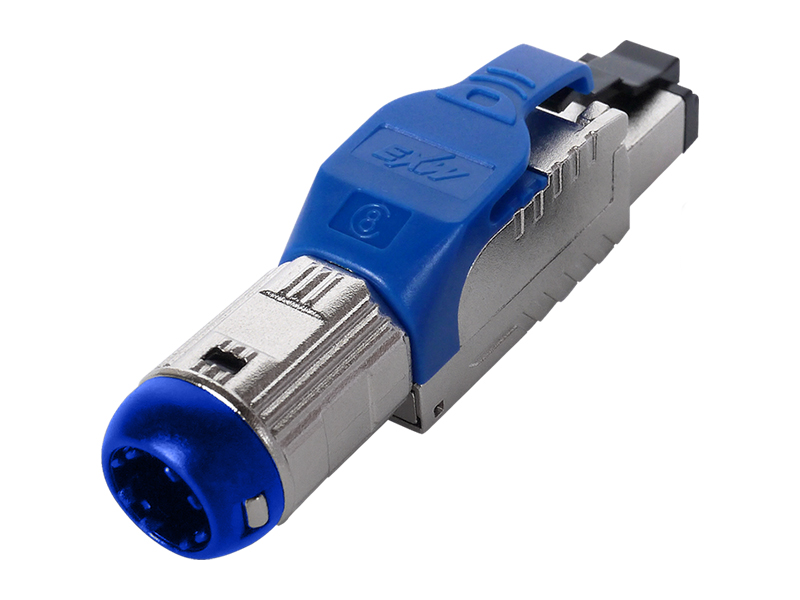
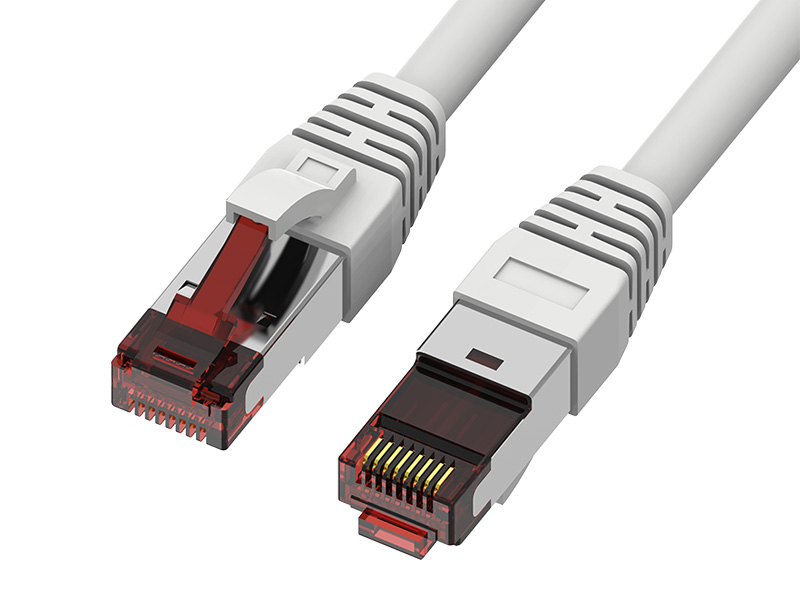
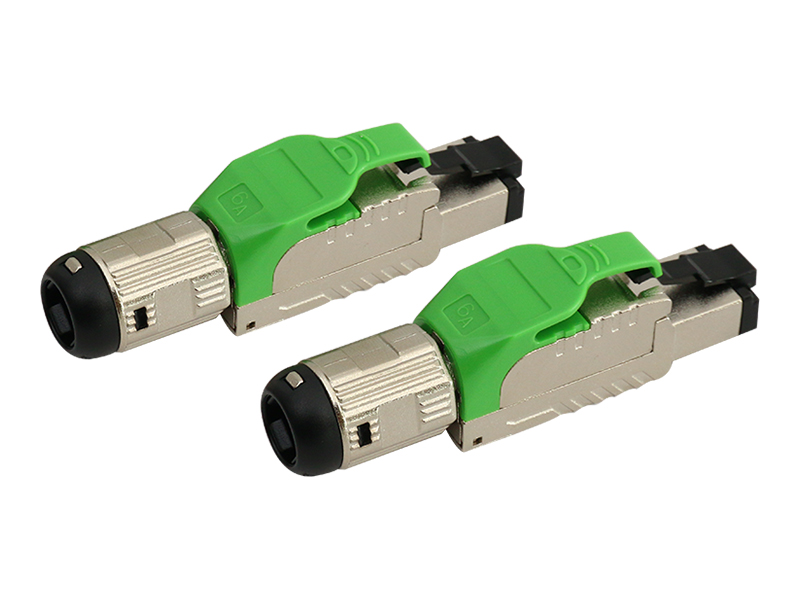
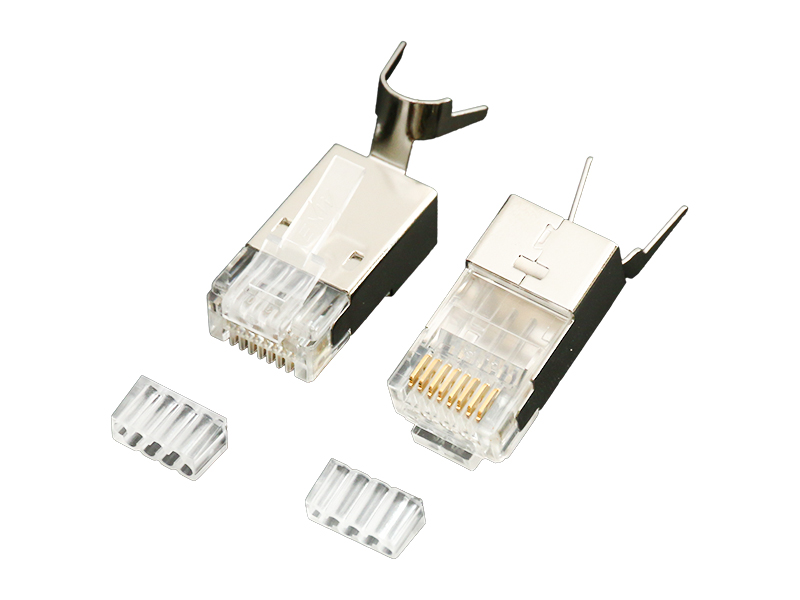
5. RJ45 Plug and Contact Requirements
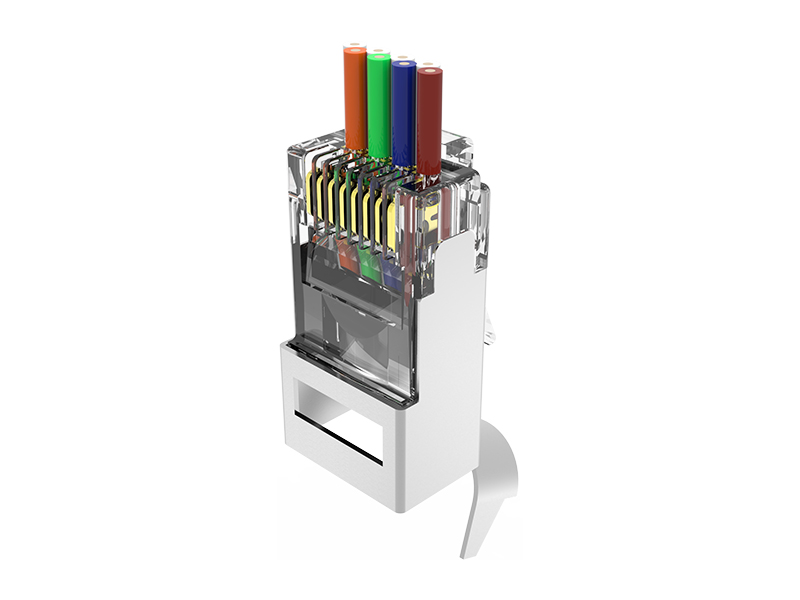
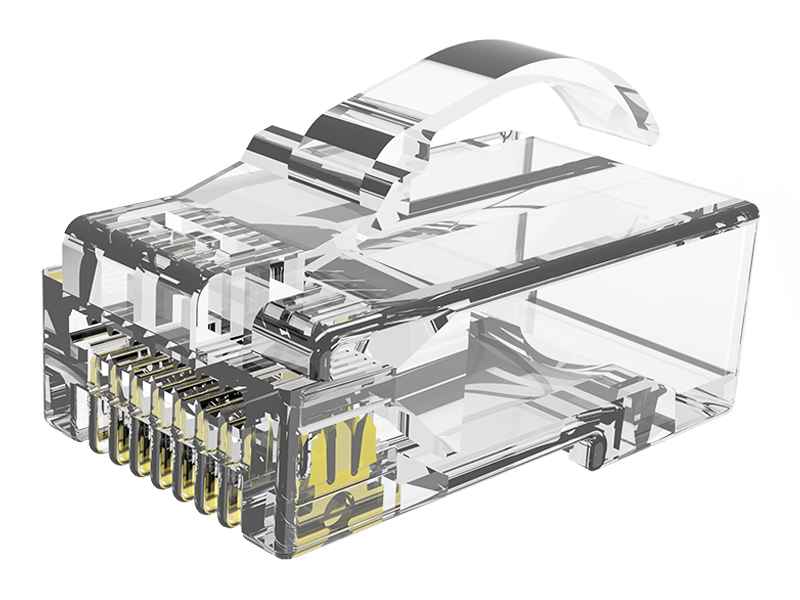
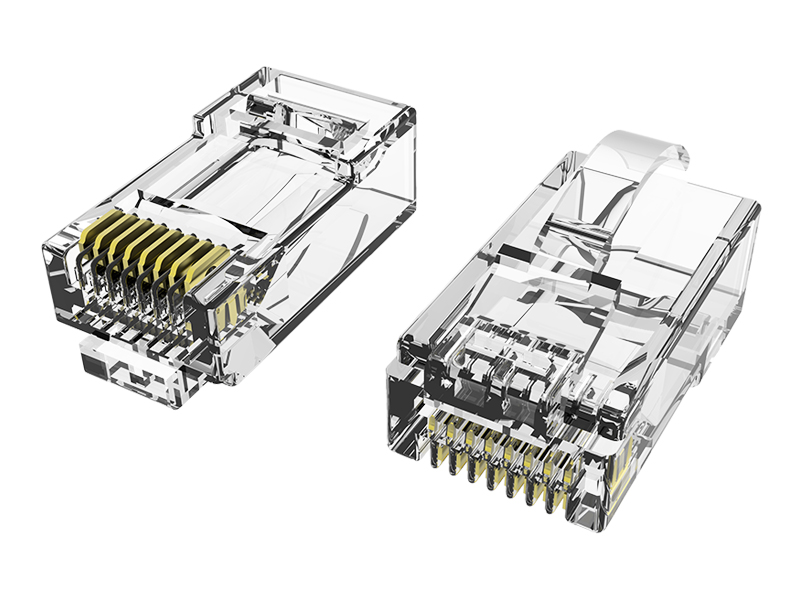
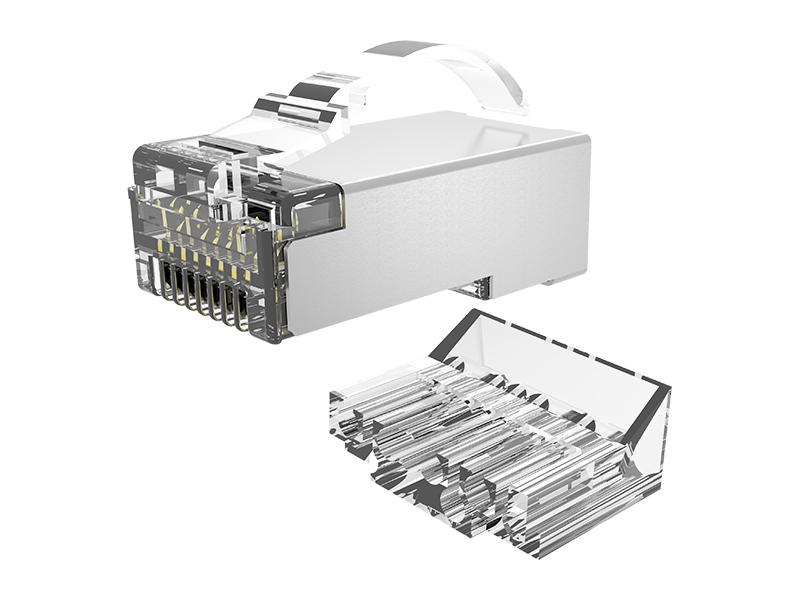
The modular plug must match both the cable and the target equipment interface. At Cat8 frequencies, shield continuity, pair arrangement, conductor positioning, and termination consistency all matter.
The OEM specification should include:
-
Shielded RJ45 plug type
-
Plug body dimensions or compatibility requirements
-
Cable OD and conductor insulation range supported by the plug
-
Contact design suitable for stranded or solid conductors
-
Gold-plating requirement
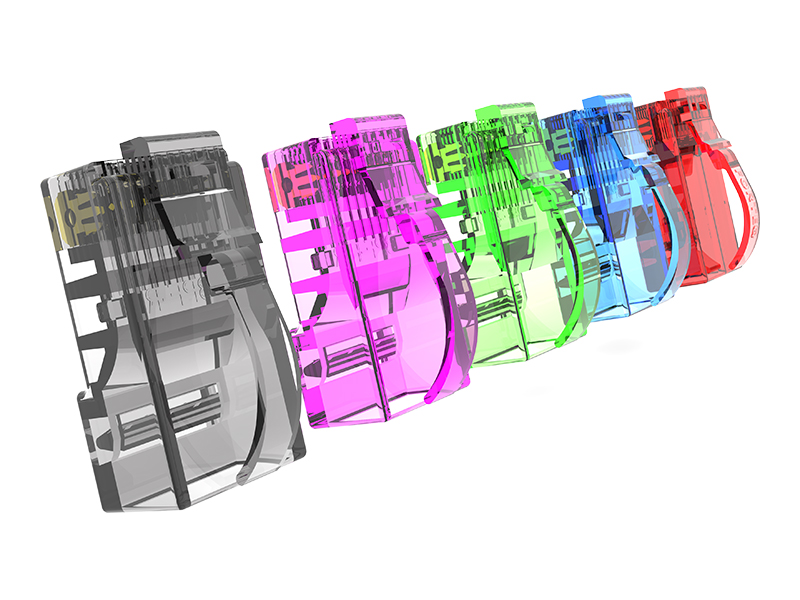
-
Transparent, tinted, or specified plug-housing color
-
Latch style and mechanical durability requirements
-
Boot type, color, and snagless design, if required
Gold plating should be specified by the applicable contact-area requirement and test method, rather than by a marketing phrase alone. If the buyer requires 50 microinch, 30 microinch, or another plating level, this should be written clearly in the approved specification.
6. Wiring Scheme and Connector Orientation
Most Ethernet patch cords use straight-through wiring, but the exact wiring scheme should still appear on the drawing or specification.
Confirm:
-
T568A or T568B wiring
-
Straight-through or crossover configuration
-
Same-direction or customer-defined plug orientation
-
Pair sequence and pin assignment
-
Shield connection requirement
For most commercial orders, T568B straight-through wiring is common. However, the manufacturer should follow the customer-approved wiring diagram rather than make assumptions.
7. Boot, Strain Relief, and Mechanical Design
The boot protects the cable-to-plug transition and can influence bend radius, port accessibility, and latch protection.
Available design points may include:
-
Standard molded boot
-
Snagless boot
-
Short-body or compact boot for high-density ports
-
Boot color matched to or contrasted with the cable jacket
-
Customer logo or molded marking
-
Bend and pull-force requirements
In high-density switches and patch panels, an oversized boot may make adjacent ports difficult to access. A sample check with the target equipment is advisable when port density is important.
8. Electrical Performance and Test Method
“Fluke tested” is not a complete test requirement. The buyer should identify what is being tested, which limit is applied, and whether the report covers a production sample, every unit, or a representative batch.
Possible requirements include:
-
100% wire-map, open/short, and continuity testing
-
Patch-cord performance testing
-
Channel testing up to 2,000 MHz
-
Customer-defined link or channel configuration
-
Insertion loss, return loss, NEXT, ACR-F, and related transmission parameters
-
Shield continuity
-
DC resistance and resistance-unbalance checks
-
Test equipment model and selected test limit
-
PASS report format and report-retention requirement
A channel PASS result confirms the performance of the complete tested channel. It should not automatically be described as an individual patch-cord component certification. The quotation and inspection plan should distinguish clearly among component, patch-cord, permanent-link, and channel testing.
9. PoE and Power-Delivery Requirements
If the patch cord will carry Power over Ethernet, the target application should be identified during specification review. Higher power levels increase the importance of conductor resistance, resistance balance, contact quality, temperature rise, bundle size, and connector performance during mating and unmating.
Confirm:
-
Whether PoE is required
-
Target IEEE PoE type or application power level
-
4-pair power delivery requirement
-
Conductor resistance and resistance-unbalance limits
-
Bundle size and ambient-temperature assumptions
-
Required third-party PoE or 4PPoE documentation
Cat8 bandwidth performance and PoE capability are related to different groups of requirements. A cable passing a Cat8 transmission test should not automatically be assumed to meet every customer-specific 4PPoE requirement. Both should be stated and verified separately.
10. Marking, Labeling, and Packaging
OEM presentation requirements should be approved before mass production, especially when products will be sold under the customer's brand.
Confirm:
-
Jacket printing content and repeat interval
-
Brand name, category, shielding, AWG, jacket, and compliance markings
-
Cable-end or serial-number labels
-
Barcode type and barcode data
-
Individual bag, paper band, box, reel, or bulk packing
-
Quantity per inner box and master carton
-
Carton marks and shipping labels
-
User instructions, test report, or other inserts
-
Customer artwork version and approval process
Custom packaging may affect minimum order quantity, tooling, printing plates, lead time, and cost. Final artwork should be approved with a version number to prevent outdated labels from entering production.
Cat8 Patch Cord OEM Checklist for RFQ
The following checklist can be copied into an RFQ or product specification form.
| Specification Item | Information to Confirm |
|---|---|
| Application | Data center, server room, cabinet, test environment, or other use |
| Target standard | Customer standard; Cat8/Cat8.1/Class I requirement |
| Data rate | 10GBASE-T, 25GBASE-T, 40GBASE-T, or other |
| Cable construction | S/FTP or specified shielded construction |
| Conductors | Stranded/solid, bare copper, required AWG |
| Dimensions | Cable OD and conductor insulation diameter |
| Jacket | PVC, LSZH/LSOH, flame rating, temperature rating |
| Color | Standard color, RAL/Pantone, or approved sample |
| Length | Finished length, measurement points, and tolerance |
| Plug | Shielded RJ45, compatible conductor/OD range, housing style |
| Contacts | Contact design and gold-plating requirement |
| Wiring | T568A/T568B, straight-through/crossover, orientation |
| Boot | Standard, snagless, compact, molded logo, required color |
| Performance test | Patch cord, channel, or customer-specific test limit |
| Production inspection | 100% continuity/wire map and sampling requirements |
| PoE | Required IEEE PoE type, 4PPoE documentation, resistance balance |
| Compliance | UL, ETL, GHMT, CE, RoHS, REACH, or market-specific requirement |
| Printing | Jacket text, brand, repeat interval, serial or date code |
| Labels | Product label, barcode, QR code, cable-end labels |
| Packaging | Individual and master packing, artwork, carton marks |
| Order details | Sample quantity, MOQ, annual demand, destination, target date |
What Should Be Approved Before Mass Production?
Before an OEM order enters mass production, both parties should approve a controlled specification package. Depending on the project, it may include:
-
Product drawing and bill of materials
-
Cable and connector specifications
-
Wiring and length-tolerance requirements
-
Golden sample or pre-production sample
-
Electrical and mechanical test plan
-
Printing, label, and packaging artwork
-
Compliance documents required for the exact model
-
Inspection criteria and acceptable quality level
This approval process gives the buyer and manufacturer the same reference for production and quality control.
OEM Cat8 Patch Cord Manufacturing from Ningbo EXW
Ningbo Excellence Communicated Connector Co., Ltd. (Ningbo EXW) manufactures modular plugs, patch cords, and structured cabling accessories for OEM and ODM customers. Established in Ningbo, China, in 2001 as the subsidiary and manufacturing base of Excellence Wire Ind. Co., Ltd. (EXW, Taiwan), Ningbo EXW supports product development with in-house engineering and mold-tooling capabilities.
Our production capabilities include stamping, electroplating, plastic injection, automatic insertion, and assembly. Cat8 patch cord projects can be reviewed according to the required cable construction, conductor size, RJ45 plug, length, jacket, color, labeling, packaging, testing, and compliance documentation.
Certification and test requirements should be confirmed for the exact product model and target market during quotation. This avoids treating a company-level certificate or another model’s report as evidence for a different finished product.
To request a quotation, send Ningbo EXW your completed specification checklist, expected order quantity, destination market, and any reference drawing or sample. Our team can review the cable-to-plug matching, manufacturing feasibility, test plan, and customization requirements before sampling.
Frequently Asked Questions
What information is most important for a first Cat8 patch cord quotation?
At minimum, provide the required length, conductor size and type, cable OD, jacket material, color, RJ45 plug and boot requirements, wiring scheme, test standard, packaging, quantity, and destination market. If some values are not yet decided, explain the application so the manufacturer can identify the missing choices.
Can the same RJ45 plug be used for every Cat8 cable?
Not necessarily. The plug must match the cable OD, conductor insulation diameter, conductor construction, AWG, pair arrangement, and required performance. A plug that works with one 26 AWG stranded cable may not be suitable for a larger 22 AWG construction.
Does every Cat8 patch cord need to be 30 meters long or shorter?
The 30-meter value refers to the maximum Cat8 channel length for 25GBASE-T and 40GBASE-T applications. It is not a recommended length for every patch cord. The correct cord length depends on the complete channel layout.
Is a channel test report the same as a patch-cord certification?
No. A channel report evaluates the complete tested channel and its selected limit. It does not by itself certify every individual cord as a standalone component. Buyers should specify which type of test and documentation they require.
Can OEM Cat8 patch cords be customized with private-label packaging?
Yes. Typical options include jacket printing, cable and boot colors, product labels, barcodes, individual packaging, cartons, and customer artwork. Availability, MOQ, tooling, and lead time depend on the exact design.
Technical Reference Notes
-
Fluke Networks, “Category 8 Cabling Fact Sheet”: https://www.flukenetworks.com/knowledge-base/applicationstandards-articles-copper/category-8-cabling-fact-sheet
-
IEEE 802.3bq, 25GBASE-T and 40GBASE-T over balanced twisted-pair cabling: https://ieeexplore.ieee.org/document/STDGTSU21086