


 中文简体
 English
 Français
 Deutsch
 عربى
Pass-Through vs. Standard RJ45 Plugs: Which Is Right for Your Project?
Home / News / Industry News / Pass-Through vs. Standard RJ45 Plugs: Which Is Right for Your Project?

Content
RJ45 modular plugs are essential components in Ethernet cabling systems. While they may look similar, different plug designs can significantly affect installation efficiency, termination quality, and long-term connection reliability.
Two commonly used designs are pass-through RJ45 plugs and standard RJ45 plugs (non-pass-through).
Pass-through plugs have become increasingly popular because they simplify wire arrangement and termination. However, some installers have reported corrosion, oxidation, and connection failures, particularly in outdoor or humid environments.
Does this mean pass-through RJ45 plugs are less reliable?
Not necessarily. Both designs have advantages, but choosing the right connector requires understanding their structural differences, installation requirements, and operating environments.
In this guide, Ningbo EXW explains how these two RJ45 plug designs compare and how to select the right solution for your project.
A pass-through RJ45 plug, also known as an EZ RJ45 plug or feed-through RJ45 connector, features an open-front design that allows the eight individual conductors to extend through the front of the connector before crimping.
During installation, technicians can arrange the wires according to the T568A or T568B wiring scheme, feed them through the connector, and visually verify the wire sequence before completing termination.
A compatible pass-through crimping tool then crimps the contacts and trims the excess wires.
Easier wire alignment: Conductors can be pulled through the connector for convenient positioning.
Visual verification: Installers can check the wire sequence before crimping.
Faster installation: The design can reduce wire arrangement time, especially during repetitive field installations.
Reduced wiring mistakes: The visible conductors make it easier to identify incorrect wire sequences before termination.
Because the conductors pass through the front of the connector, the final termination depends heavily on proper trimming and crimping.
If the wire ends are not cut cleanly or remain exposed, they may be more vulnerable to moisture, contamination, and corrosion.
Important: Not all pass-through connectors have the same design or performance. Contact structure, conductor compatibility, tooling, and termination quality all affect reliability.
A standard RJ45 plug, also called a non-pass-through RJ45 plug or closed-end RJ45 plug, has a closed front that prevents individual conductors from extending beyond the connector body.
During termination, installers arrange the conductors in the correct sequence, trim them to the appropriate length, insert them into the connector, and crimp the contacts.
Unlike pass-through plugs, the wires remain inside the connector housing.
Enclosed wire ends: Conductors do not extend through the front of the connector.
Reduced direct exposure: The closed-front structure provides an additional physical barrier against contamination at the connector tip.
Established termination method: Widely used in factory-assembled Ethernet patch cords and structured cabling applications.
Broad product availability: Available in different categories, contact designs, cable sizes, and shielding configurations.
Wire arrangement may require more preparation before insertion.
Incorrect wire sequences can be harder to identify after the wires are fully inserted.
Consistent termination quality depends on operator experience and appropriate tooling.
For manufacturers using controlled production processes, standard RJ45 plugs offer a practical solution for consistent, repeatable cable assembly.
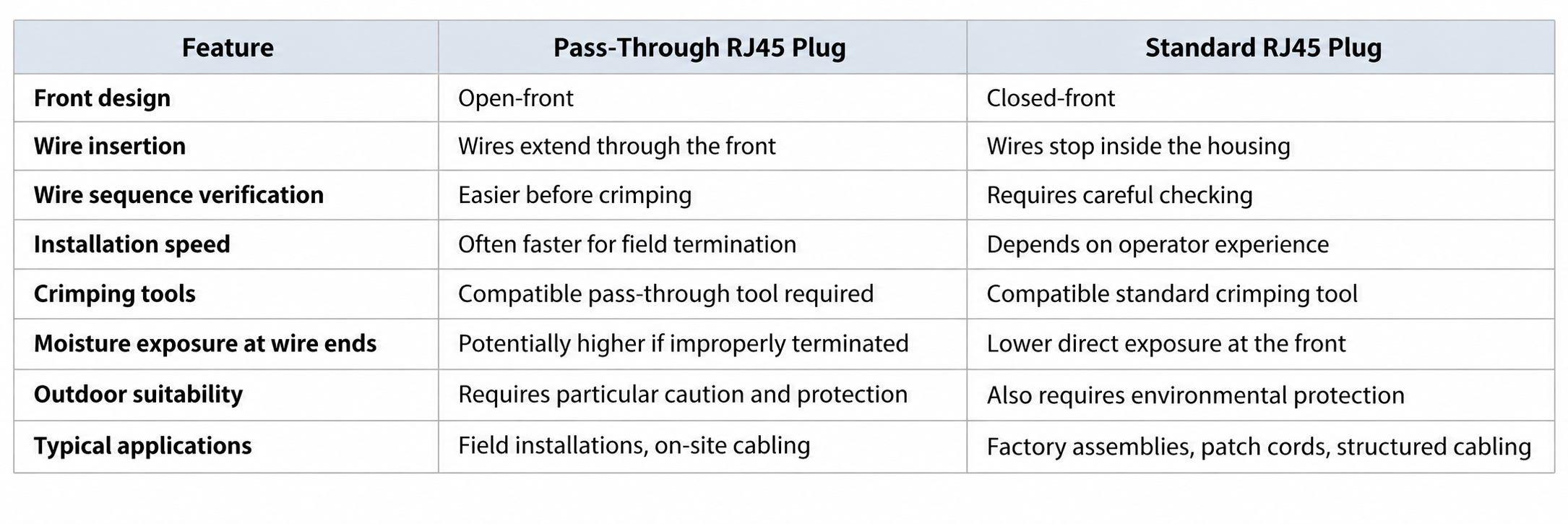
Neither design automatically guarantees better electrical performance. Connector quality, cable compatibility, contact design, and termination workmanship are critical for both.
One concern with pass-through RJ45 plugs is their potential vulnerability to moisture-related problems.
Some users report that pass-through connectors perform well indoors but develop connection issues after being installed outdoors or in humid environments.
The problem is often related to environmental exposure rather than the pass-through concept itself.
With a pass-through design, the individual conductors extend through the connector's front opening during installation.
After crimping, the excess wire must be trimmed flush with the connector face.
If conductor ends remain exposed, moisture and contaminants may reach the copper surfaces.
Over time, this can contribute to oxidation or corrosion, particularly when water repeatedly enters the connection area.
Outdoor Ethernet installations may be exposed to rain, condensation, humidity, and temperature fluctuations.
When water enters an unprotected connector assembly, it can affect the electrical contacts and exposed conductive surfaces.
Possible consequences include:
Oxidation or corrosion of conductive surfaces
Increased contact resistance
Intermittent network connections
Unstable data transmission
Premature connector failure
In severe cases, corrosion can lead to complete connection failure.
A pass-through plug requires a compatible crimping tool capable of cutting the conductors cleanly.
Poor trimming may leave uneven or protruding wire ends.
These exposed ends can increase the risk of contamination and may interfere with proper connector mating.
For reliable termination, installers should always follow the connector manufacturer's tooling and installation instructions.
An ordinary RJ45 plug is not automatically waterproof, regardless of whether it uses a pass-through or standard design.
Even a standard closed-end connector can experience corrosion when installed in an unprotected outdoor environment.
Ningbo EXW recommends avoiding ordinary pass-through RJ45 plugs in outdoor, rain-exposed, or persistently damp environments unless the complete connector assembly is specifically designed and qualified for those conditions.
For outdoor applications, use a properly rated waterproof connector system or protective enclosure with appropriate cable sealing.
For outdoor Ethernet cabling, environmental protection should be the first consideration.
Although a standard RJ45 plug has a closed-front structure, it should not be considered waterproof.
A standard plug may reduce direct exposure of conductor ends at the front, but moisture can still enter through other parts of an unsealed connection.
For applications involving outdoor security cameras, wireless access points, industrial networking equipment, or exposed Ethernet connections, installers should consider:
Waterproof or weather-resistant connector assemblies with an appropriate IP rating
Proper cable glands and sealing systems
Outdoor-rated Ethernet cables
Suitable strain relief and mechanical protection
Protection against condensation and water accumulation
Recommendation: For ordinary indoor cabling, either connector design may be suitable. For outdoor or moisture-prone environments, avoid relying on an unprotected pass-through plug. Select a complete connection system rated for the installation conditions.
A common question is whether pass-through RJ45 plugs affect Ethernet transmission performance.
The answer depends on connector design, cable compatibility, and termination quality.
Both pass-through and standard RJ45 plugs can be engineered to meet applicable performance requirements.
However, poor termination can negatively affect electrical characteristics such as:
Near-End Crosstalk (NEXT)
Return Loss
Insertion Loss
Connection stability
For example, excessive conductor untwisting, improper contact engagement, or incompatible cable dimensions can reduce transmission performance.
The open-front design itself does not necessarily cause inferior performance.
For Cat6, Cat6A, and other higher-performance cabling systems, always verify that the plug is designed for the cable category, conductor type, and cable dimensions.
Where applicable, completed cable assemblies should be tested against the relevant performance requirements.
Selecting an RJ45 connector involves more than choosing between pass-through and standard designs.
For indoor offices, residential networking, and protected equipment rooms, pass-through connectors can provide installation convenience.
For outdoor or humid environments, prioritize environmental sealing and corrosion protection.
Confirm the connector supports your cable's:
Ethernet category (Cat5e, Cat6, Cat6A, etc.)
Conductor gauge (AWG)
Solid or stranded conductor construction
Individual conductor insulation diameter
Overall cable outer diameter (OD)
Shielded or unshielded construction
An incompatible plug can cause poor crimping, unstable contact, or mechanical damage.
RJ45 connector reliability also depends on contact structure and surface plating.
Gold-plated contacts help maintain reliable electrical contact by protecting the mating surface against corrosion and wear.
However, gold plating does not make a connector waterproof, nor does it prevent oxidation of exposed copper conductor ends.
For projects requiring repeated mating cycles or long-term reliability, contact design and plating specifications should be evaluated together.
For installers terminating many cables on-site, pass-through plugs may help improve installation efficiency.
For factory-produced patch cords, standard plugs can be well suited to automated or controlled assembly processes.
The best choice depends on the production workflow and application requirements.
Ningbo Excellence Communicated Connector Co., Ltd. (Ningbo EXW / NBEXW) is a professional RJ45 modular plug manufacturer established in 2001 and the manufacturing subsidiary of Taiwan-based Excellence Wire Ind. Co., Ltd. (EXW).
With more than 40 years of industry experience through our parent company, we provide RJ45 connector solutions for networking, structured cabling, and OEM/ODM projects.
Our manufacturing capabilities include:
In-house metal stamping: Supporting consistent contact manufacturing.
Electroplating: Providing different gold plating thickness options.
Plastic injection molding: Supporting connector housing production.
Automatic contact insertion: Improving production consistency.
In-house mold development: Supporting customized connector designs.
Quality control: Covering dimensional inspection, contact quality, and applicable performance testing.
Our RJ45 modular plug product range covers Cat5e through Cat8, with multiple contact structures, housing designs, and gold plating options.
We support OEM/ODM customization based on cable specifications, installation requirements, and customer applications.
Whether your project prioritizes installation efficiency, reliable termination, or long-term connection performance, our team can help you select a suitable RJ45 connector solution.
Not necessarily. Pass-through plugs can provide reliable connections when properly designed, crimped, and used in suitable environments. However, exposed conductor ends or improper trimming can increase the risk of moisture-related problems.
Ordinary pass-through plugs are not recommended for unprotected outdoor or persistently damp installations. Use a properly rated waterproof connector assembly or protective enclosure for outdoor applications.
Corrosion may occur when moisture reaches exposed copper conductor ends or other conductive surfaces. Improper trimming, rainwater ingress, condensation, and insufficient environmental protection can contribute to the problem.
No. A closed-front RJ45 plug is not automatically waterproof. Outdoor installations require appropriate environmental sealing and protection.
Yes, compatible pass-through plug designs are available for Cat6 and Cat6A applications. However, the connector must match the cable construction and applicable category performance requirements.
Pass-through RJ45 plugs are often easier for manual field termination because installers can visually check the wire sequence before crimping. Standard plugs may require more preparation but are widely used in controlled cable assembly processes.
Both pass-through and standard RJ45 plugs have their place in Ethernet cabling systems.
Pass-through connectors offer convenient wire alignment and potentially faster field installation, while standard RJ45 plugs provide a closed-front structure that keeps conductor ends inside the housing.
However, the installation environment is just as important as the connector design.
For outdoor or humid applications, moisture protection should never be overlooked. An unprotected pass-through connector with exposed copper ends may be especially vulnerable to corrosion, but ordinary standard plugs also require appropriate protection.
By considering installation conditions, cable compatibility, contact quality, and termination methods, you can select an RJ45 connector that provides reliable long-term performance.
Looking for reliable RJ45 modular plugs for your next project?
Contact Ningbo EXW to discuss connector specifications, OEM/ODM requirements, and suitable solutions for your Ethernet cabling applications.
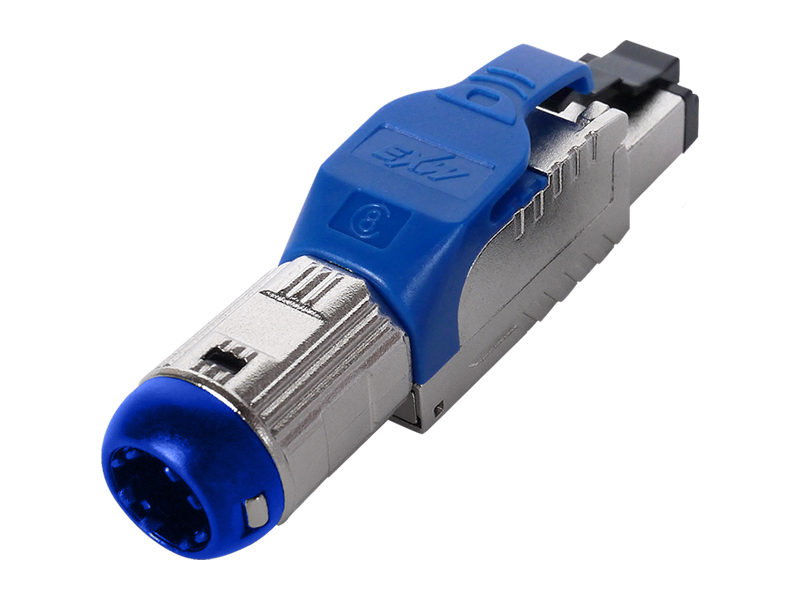
Cat.8 Field Termination Plug | GHMT Certified RJ45 Connector for 40G Ethernet Cabling
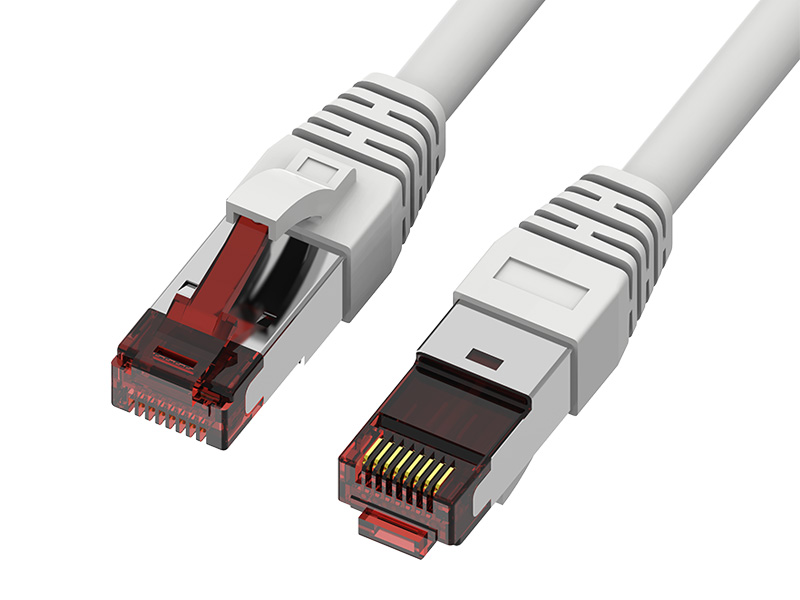
Cat.6A S/FTP Patch Cord | Fluke Tested 10G Shielded RJ45 Ethernet Cable
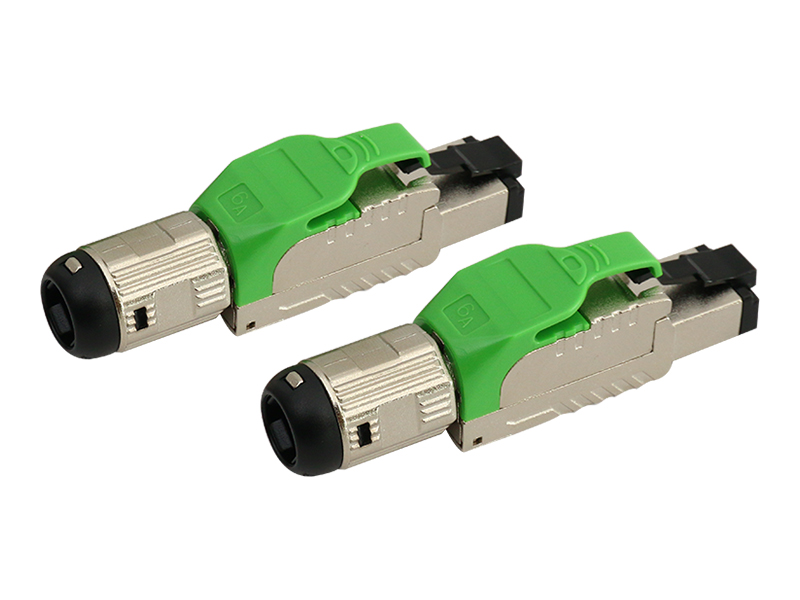
Cat.6A Field Termination Plug | Shielded RJ45 Connector for 10G Ethernet & 4PPoE Cabling
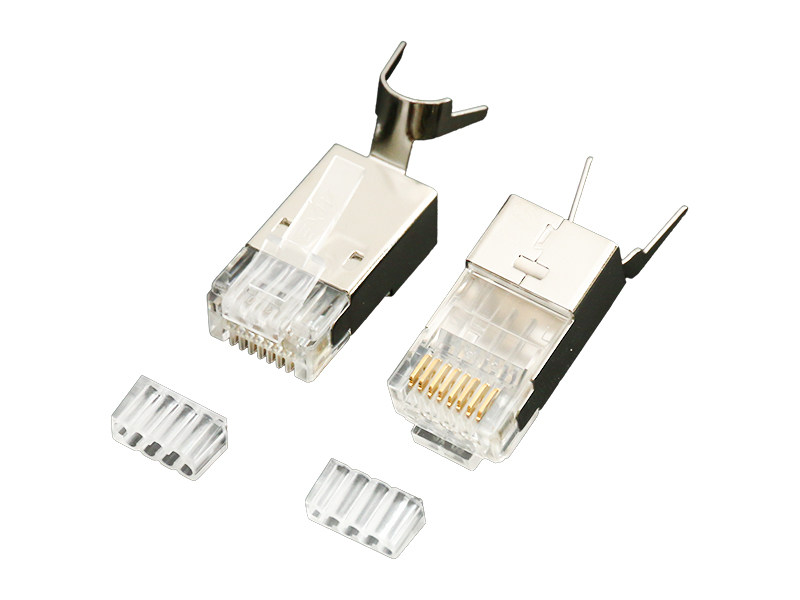
Fat OD Modular Plug | RJ45 Connector for Large Diameter Ethernet Cable Applications
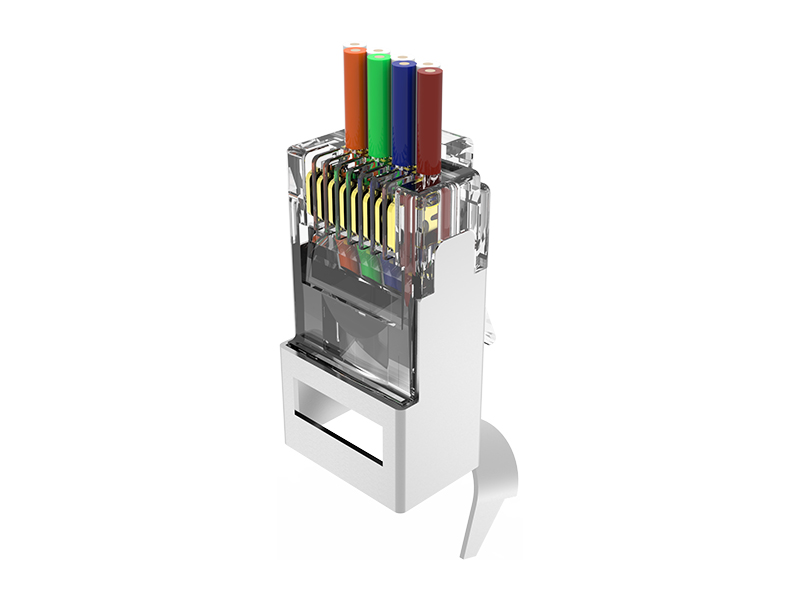
Fat OD Pass-Through Plug | RJ45 Connector for Large Diameter Ethernet Cable Applications
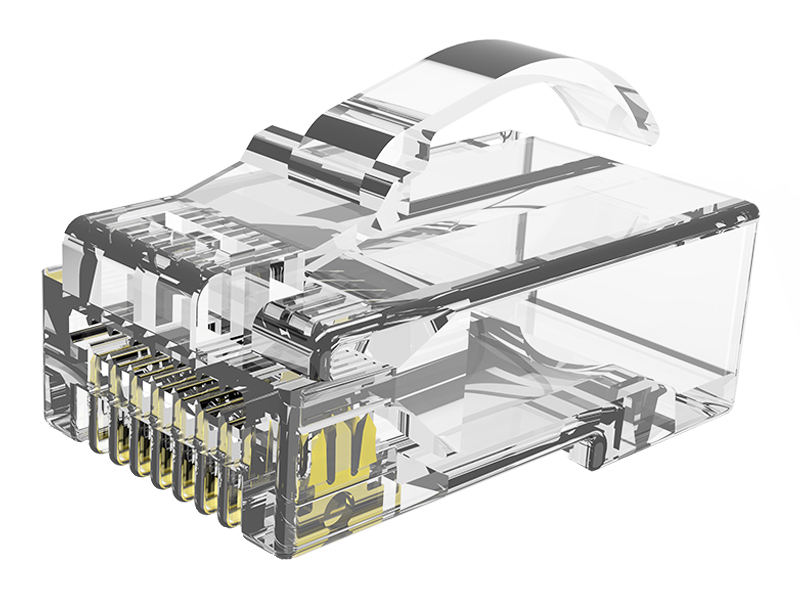
Cat.5E UTP Arch Latch Modular Plug | RJ45 8P8C Connector for Ethernet Cabling
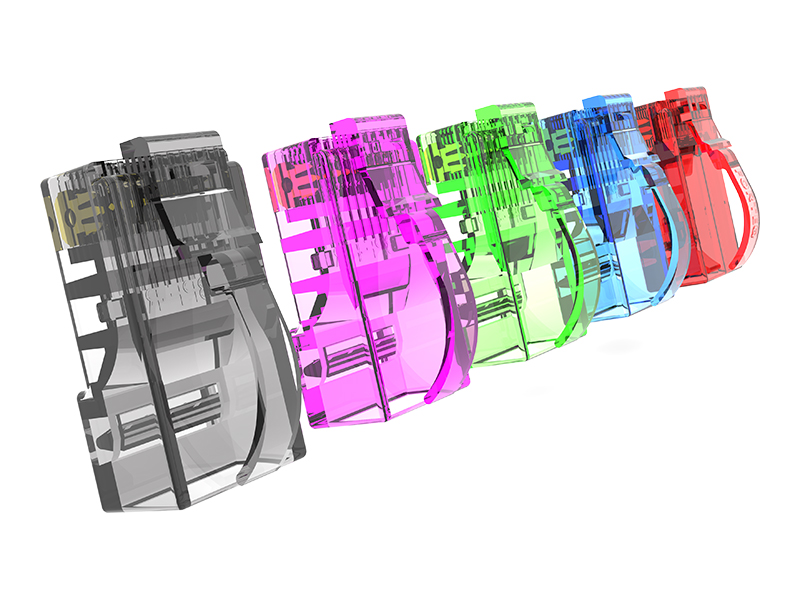
Cat.5E STP Arch Latch Modular Plug | Shielded RJ45 8P8C Connector for Ethernet Cabling
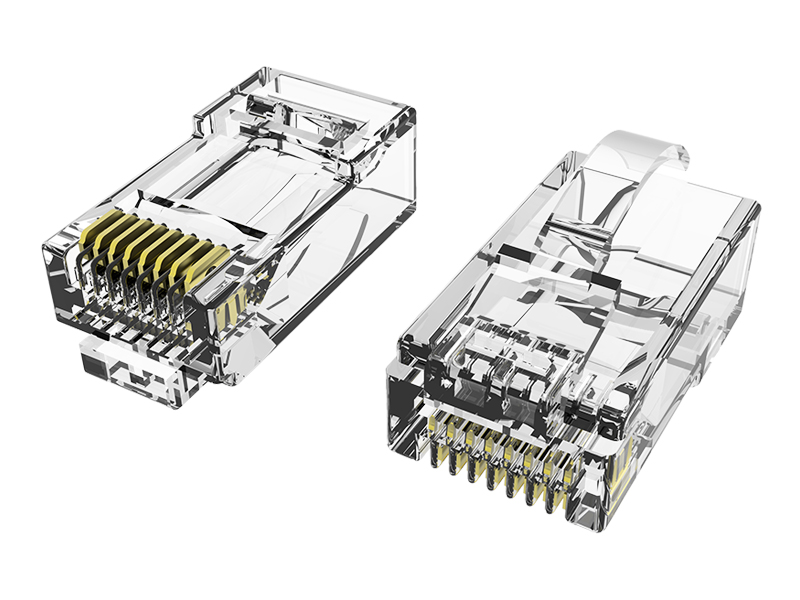
Cat.6 UTP Arch Latch Modular Plug | RJ45 8P8C Connector for Ethernet Cabling
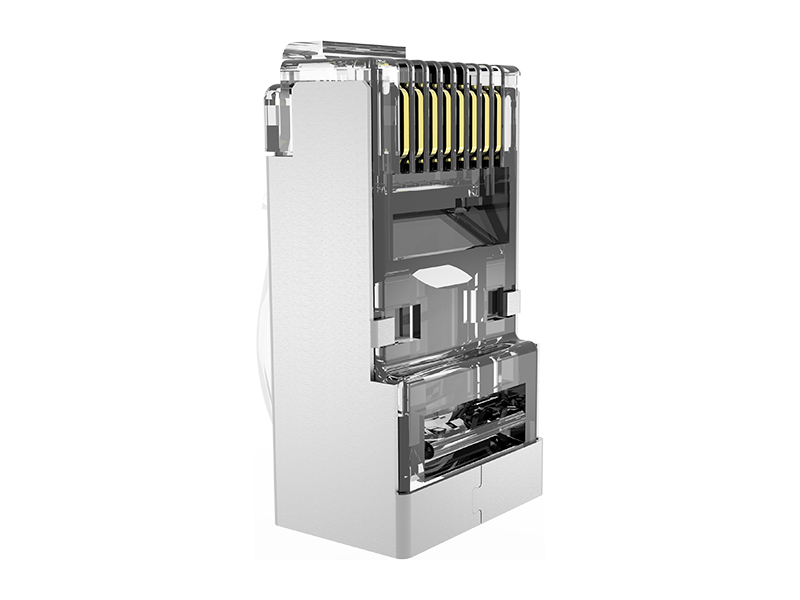
Cat.6 STP Arch Latch Modular Plug | Shielded RJ45 8P8C Connector for Ethernet Cabling
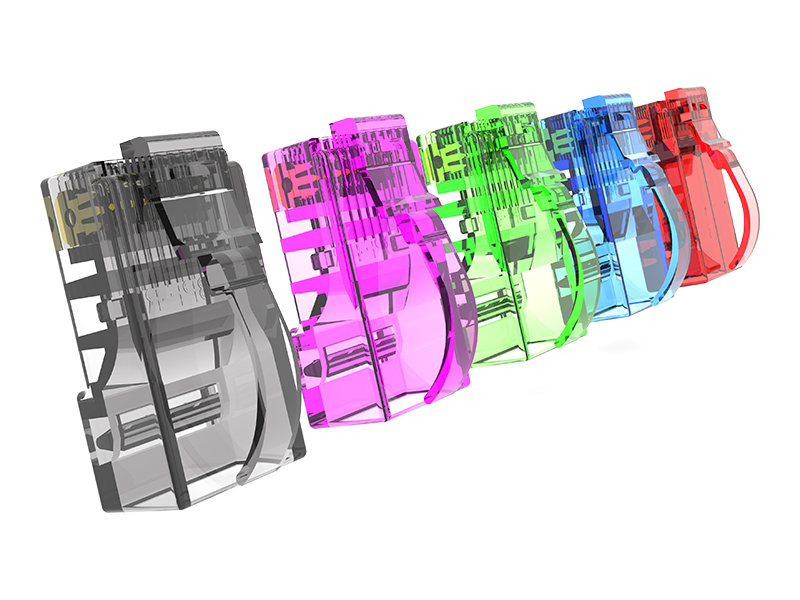
Cat.6A UTP Arch Latch Modular Plug | RJ45 8P8C Connector for 10G Ethernet Cabling
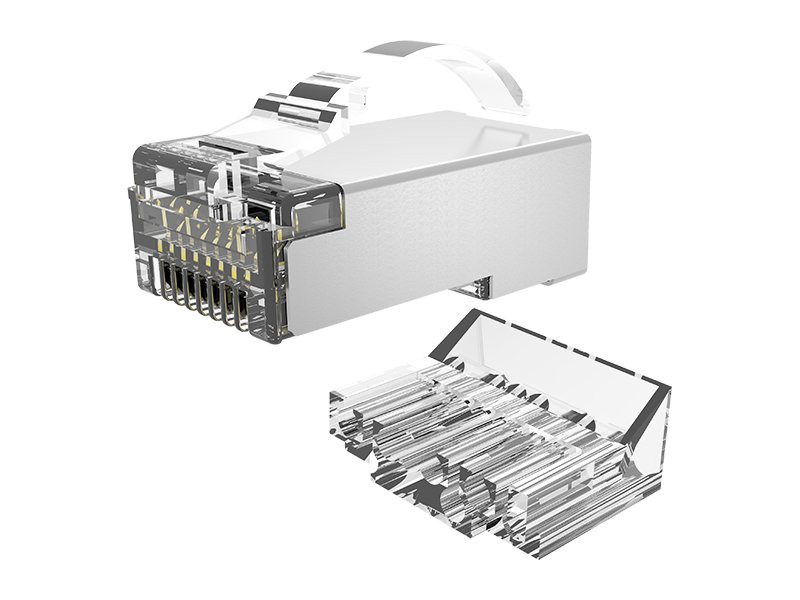
Cat.6A STP Arch Latch Connector | Shielded RJ45 8P8C Connector for 10G Ethernet Cabling
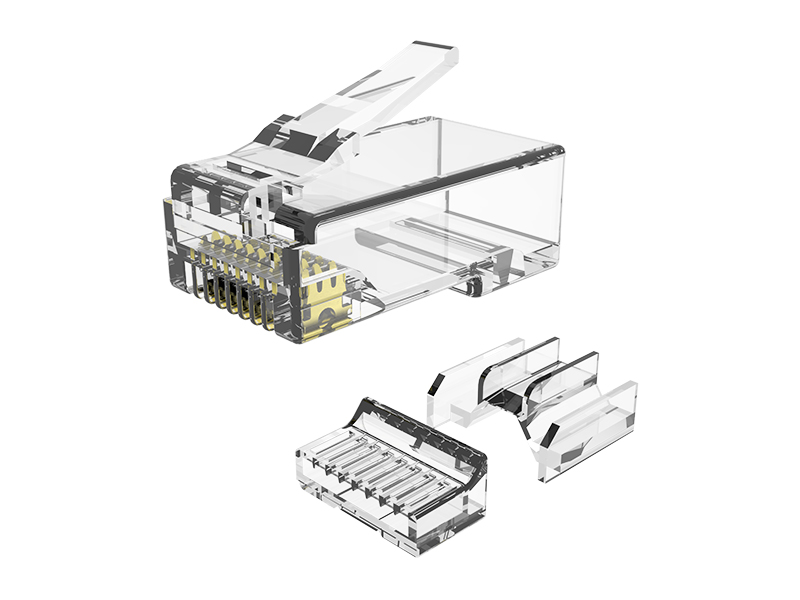
Cat.6A UTP 3R Modular Plug | RJ45 8P8C Connector for 10G Ethernet Cabling

 No. 651, Hengshanxi Road, Beilun, Ningbo, Zhejiang Province, China
 sales@nbexw.com
 +86-574-86868738
 +86 138 5828 0875